

Kusini Camp
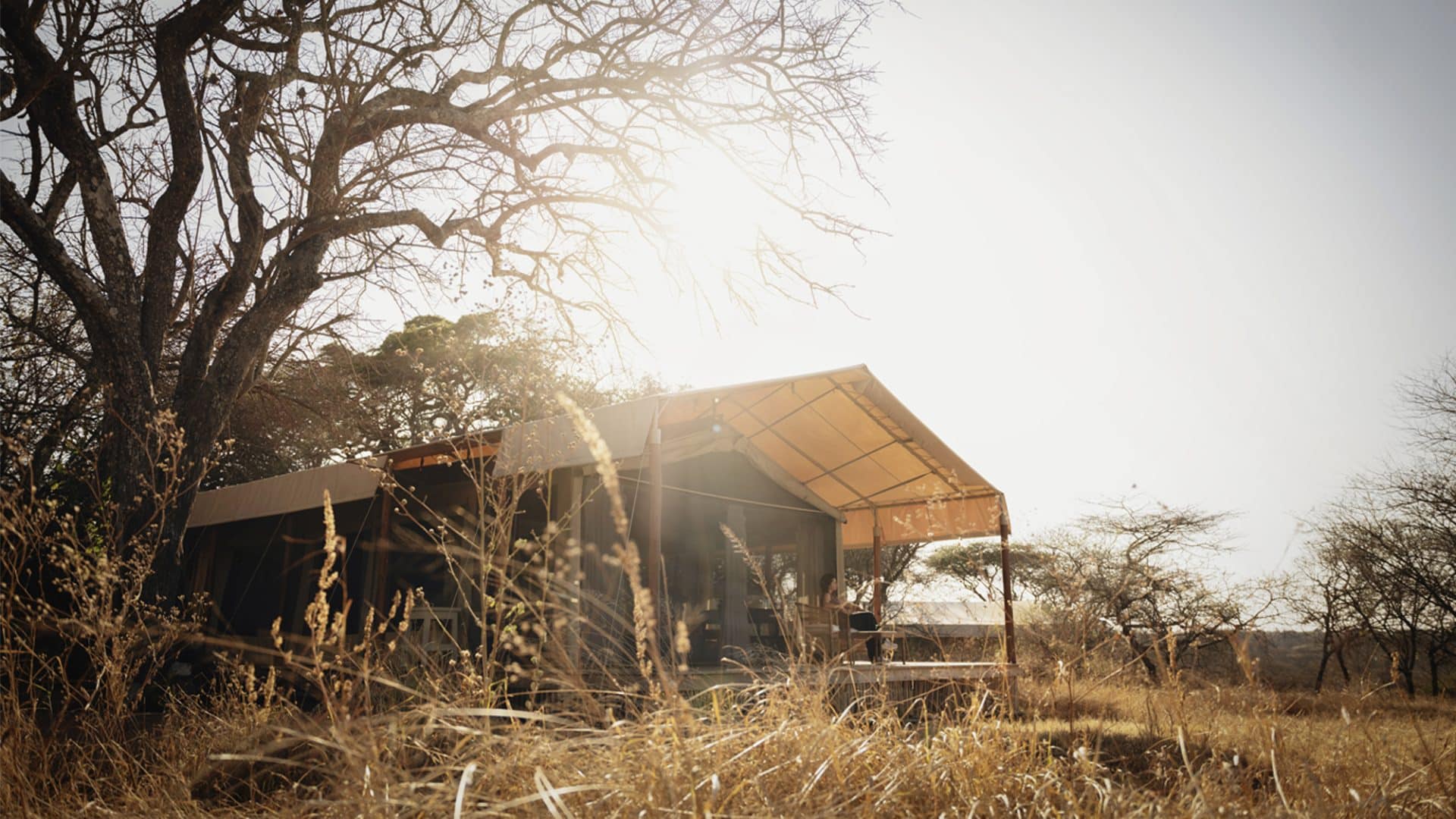
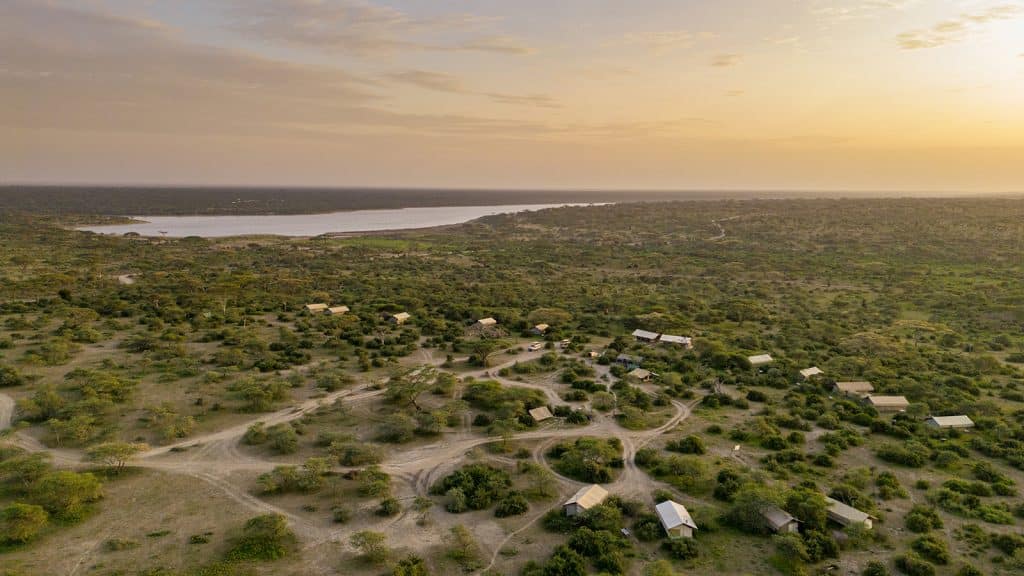
An isolated retreat in the southern Serengeti, Kusini features just six spaciously separated safari tents among granite kopjes and acacia woodlands. Reopened by Nomad Tanzania in December 2025, it offers exceptional seclusion, service, food, and wildlife in the green season.
Details
The Quiet Edge of the Serengeti
Afternoon sunlight sifts through billowing clouds, and muted blue shadows roll over endless windswept savanna. The skies open wide, the plains stretch as far as the eye can see, and your soul finds stillness in the space that is the Serengeti. It is here, in the most unexpected of places, that you will find a camp of your wildest dreams.
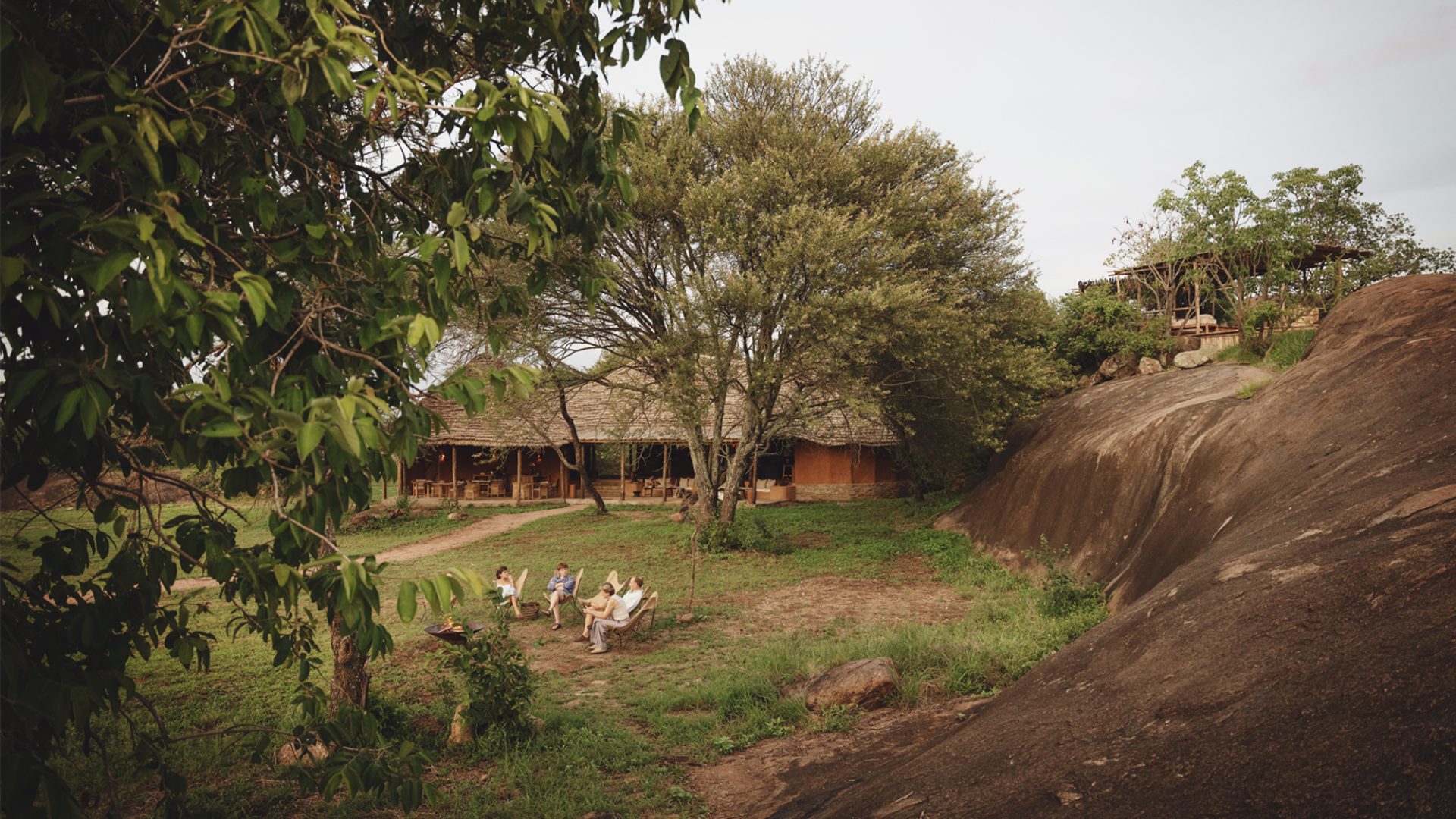
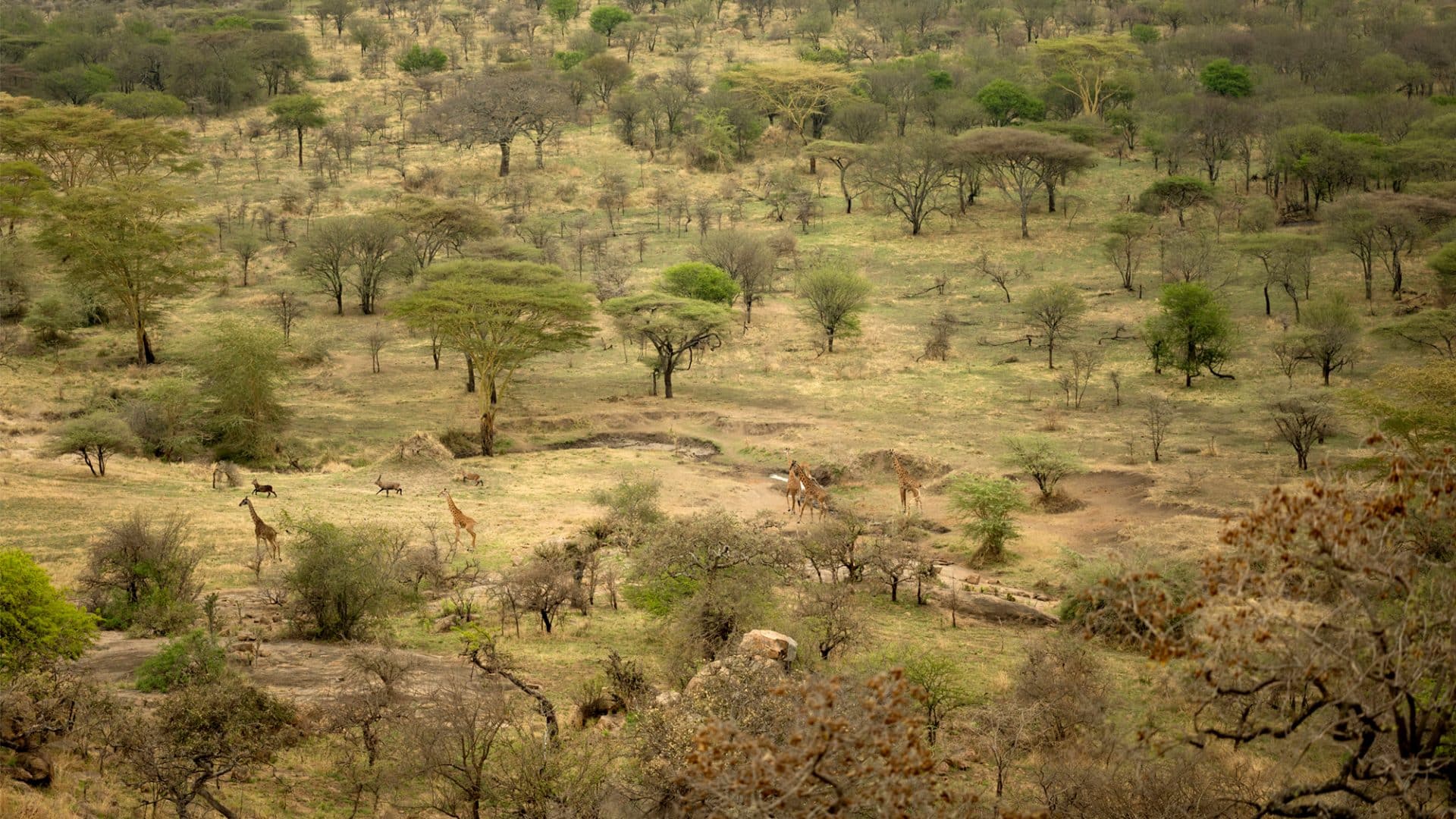
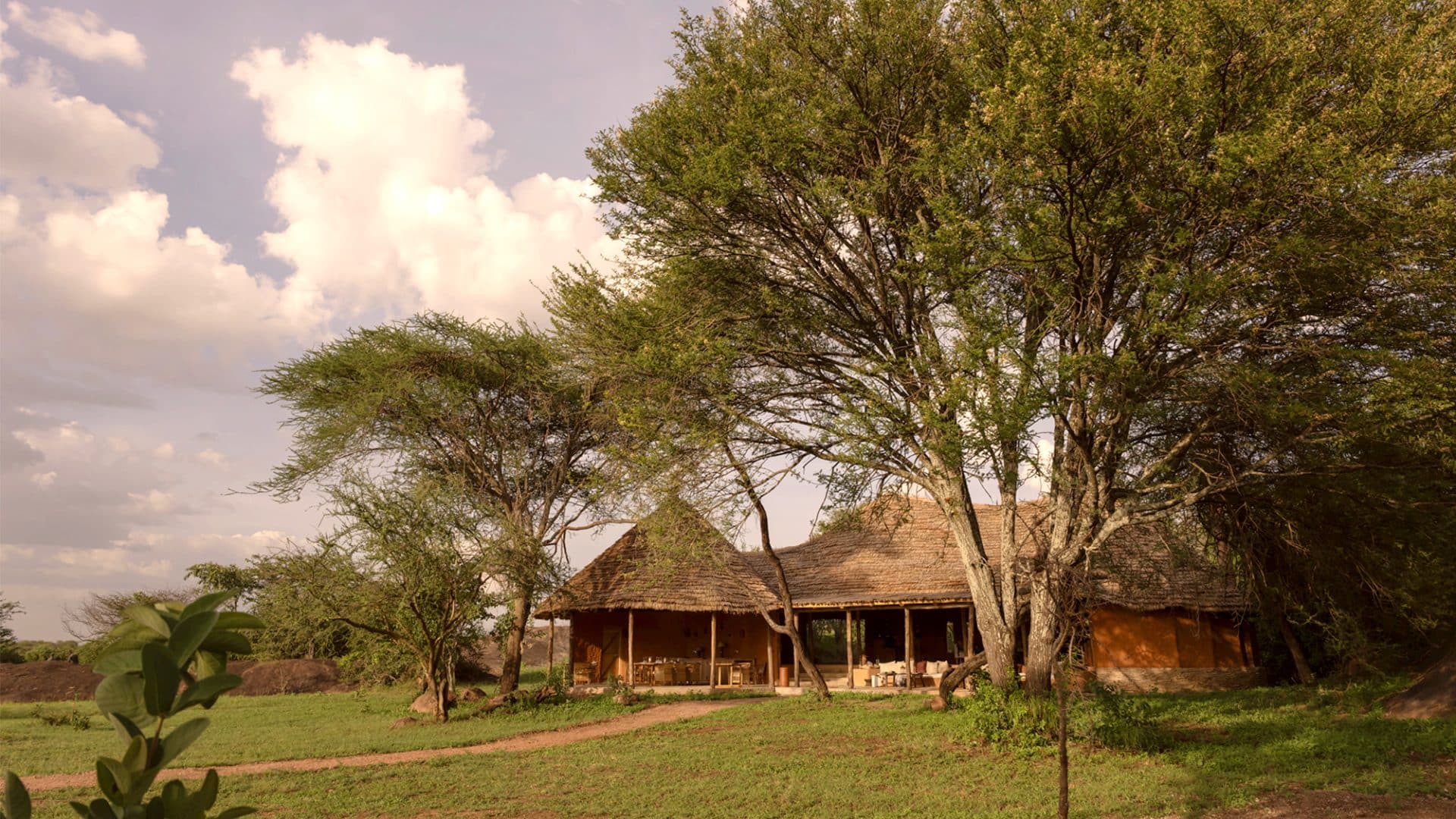
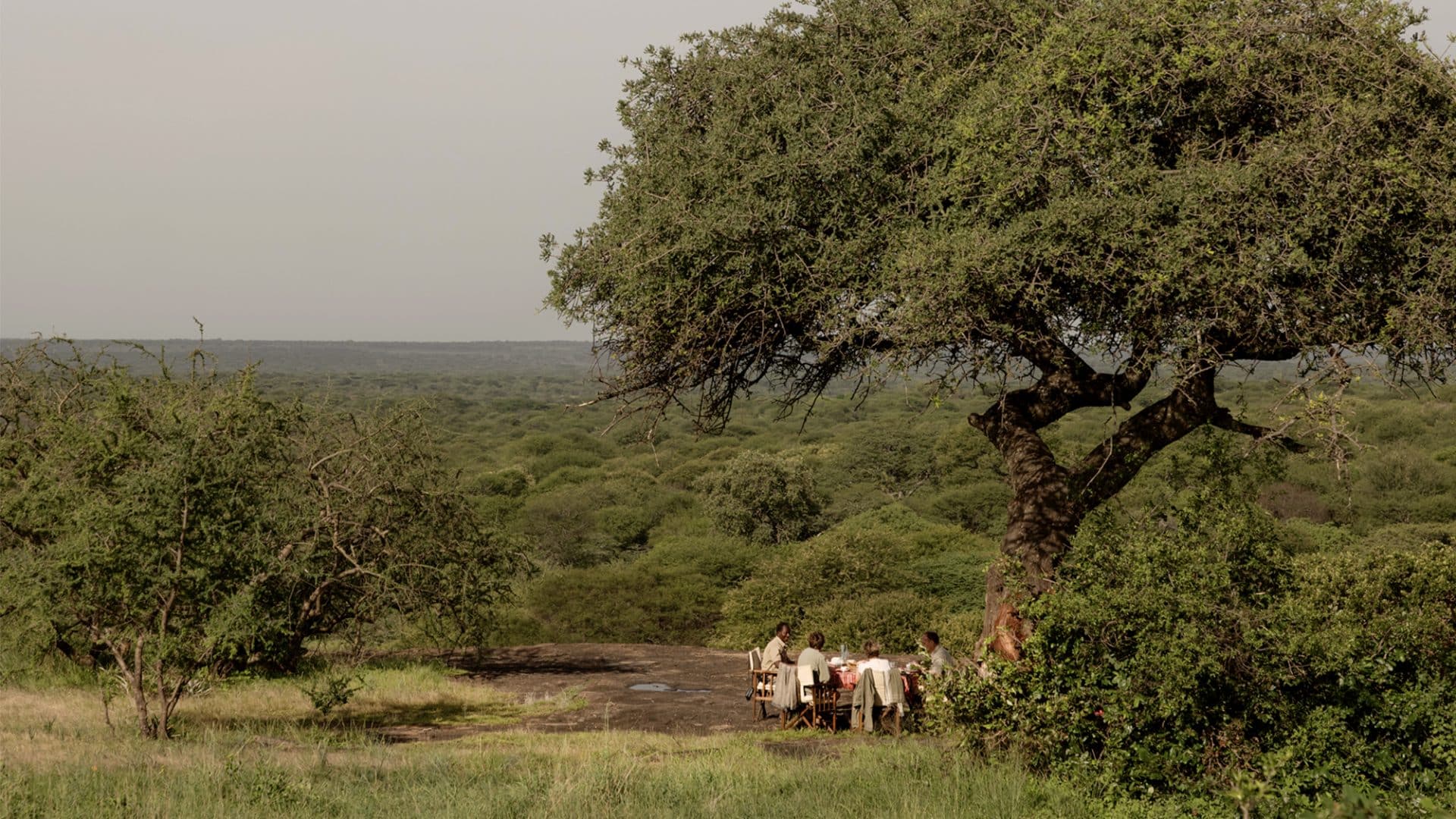
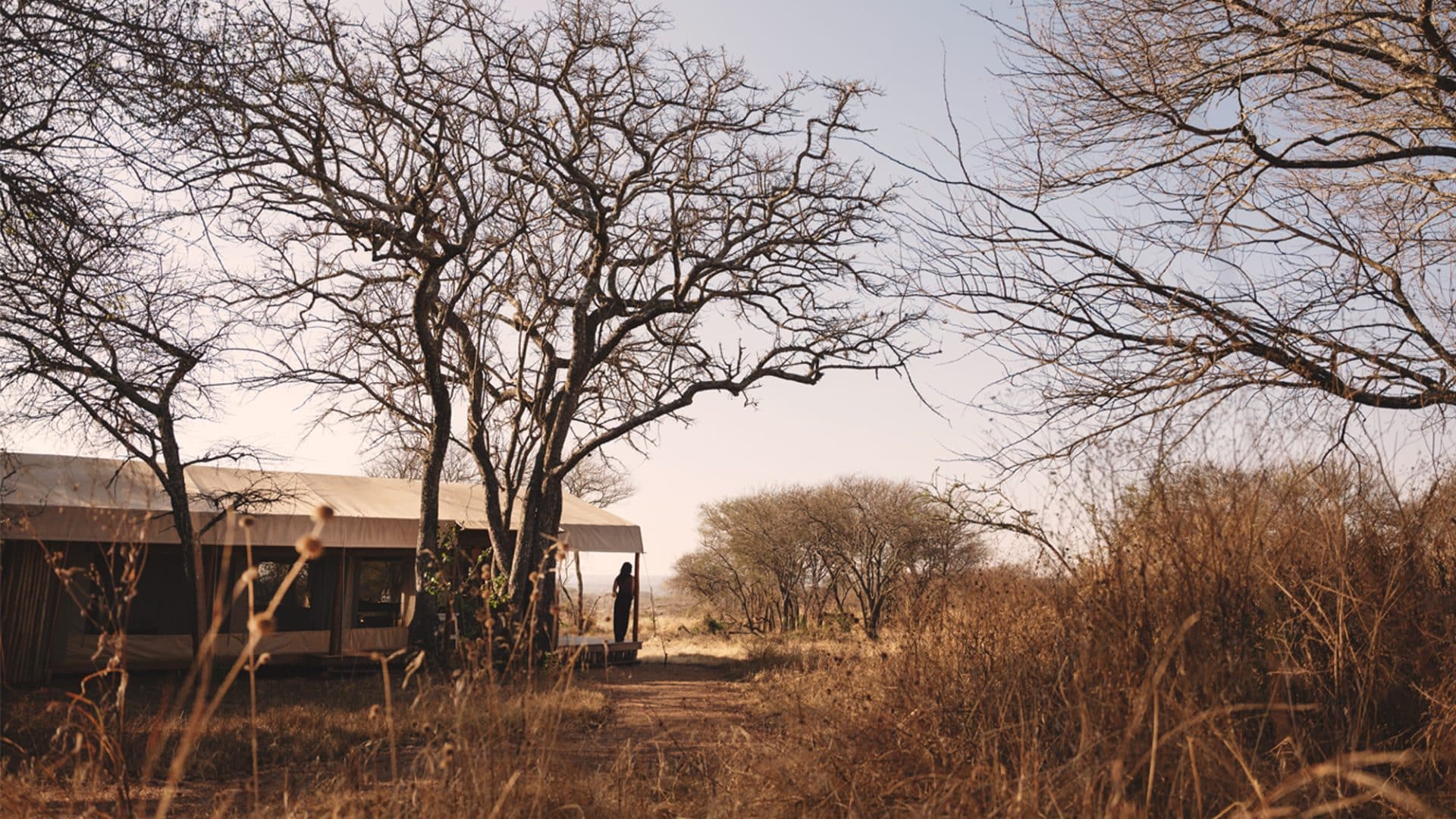
Kusini is an isolated retreat tucked into a remote pocket of the southern Serengeti, where the open plains converge with the acacia woodlands. Galloping zebras create running patterns of stripes in the tall grasses, and the profiles of umbrella-shaped acacias burn dark silhouettes on the horizon. For twenty years this was Sanctuary Kusini Camp, one of the most loved small camps in the park, and in December 2025 Nomad Tanzania, the company behind Lamai Serengeti and Entamanu Ngorongoro, took it over and reopened it with a new mess area and the camp trimmed to just six tents, spaced far apart under the shade trees at the foot of a granite kopje. Nomad’s own line is that Kusini is not about being in the middle of everything; it is about being exactly where they want to be.
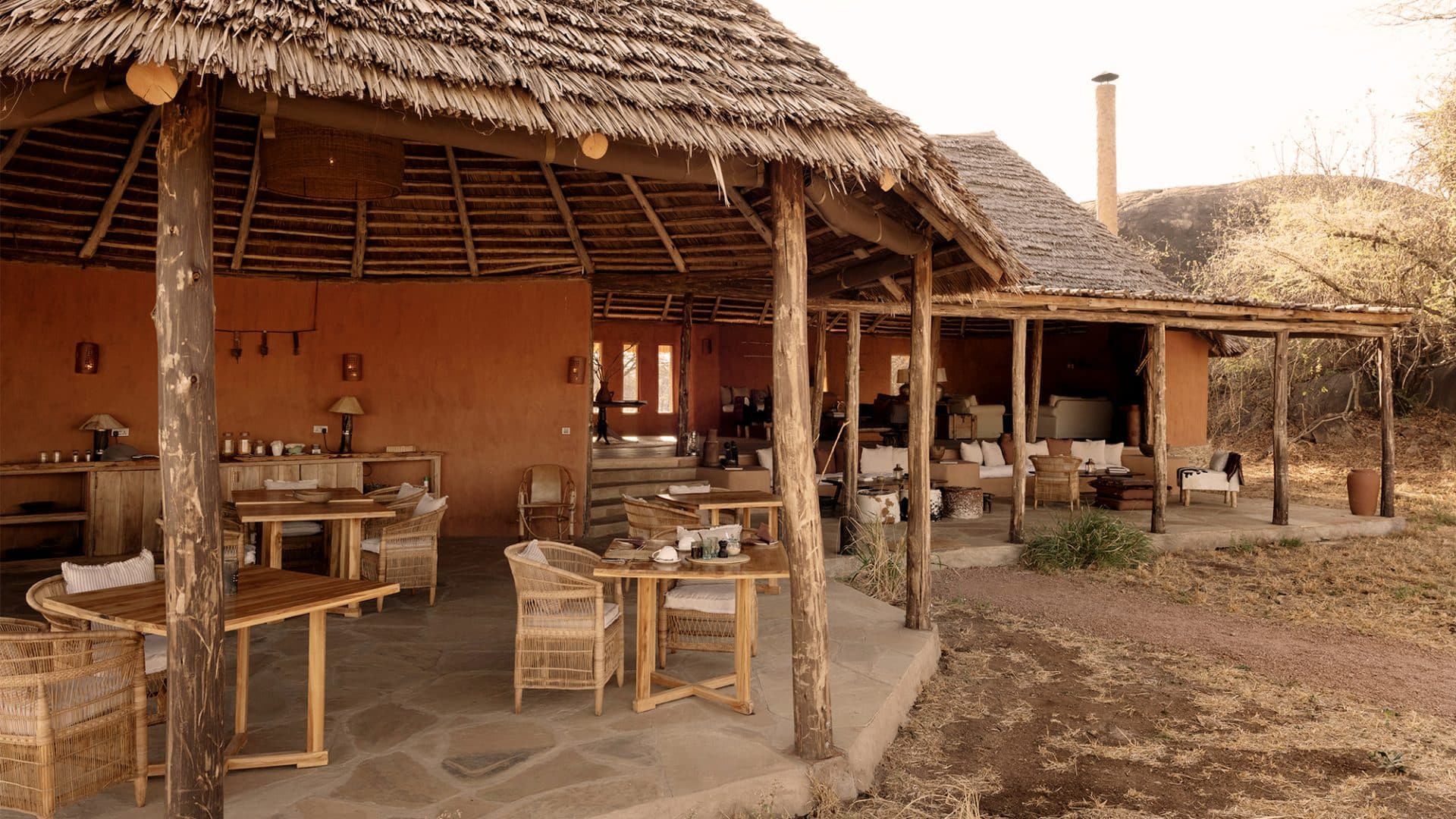
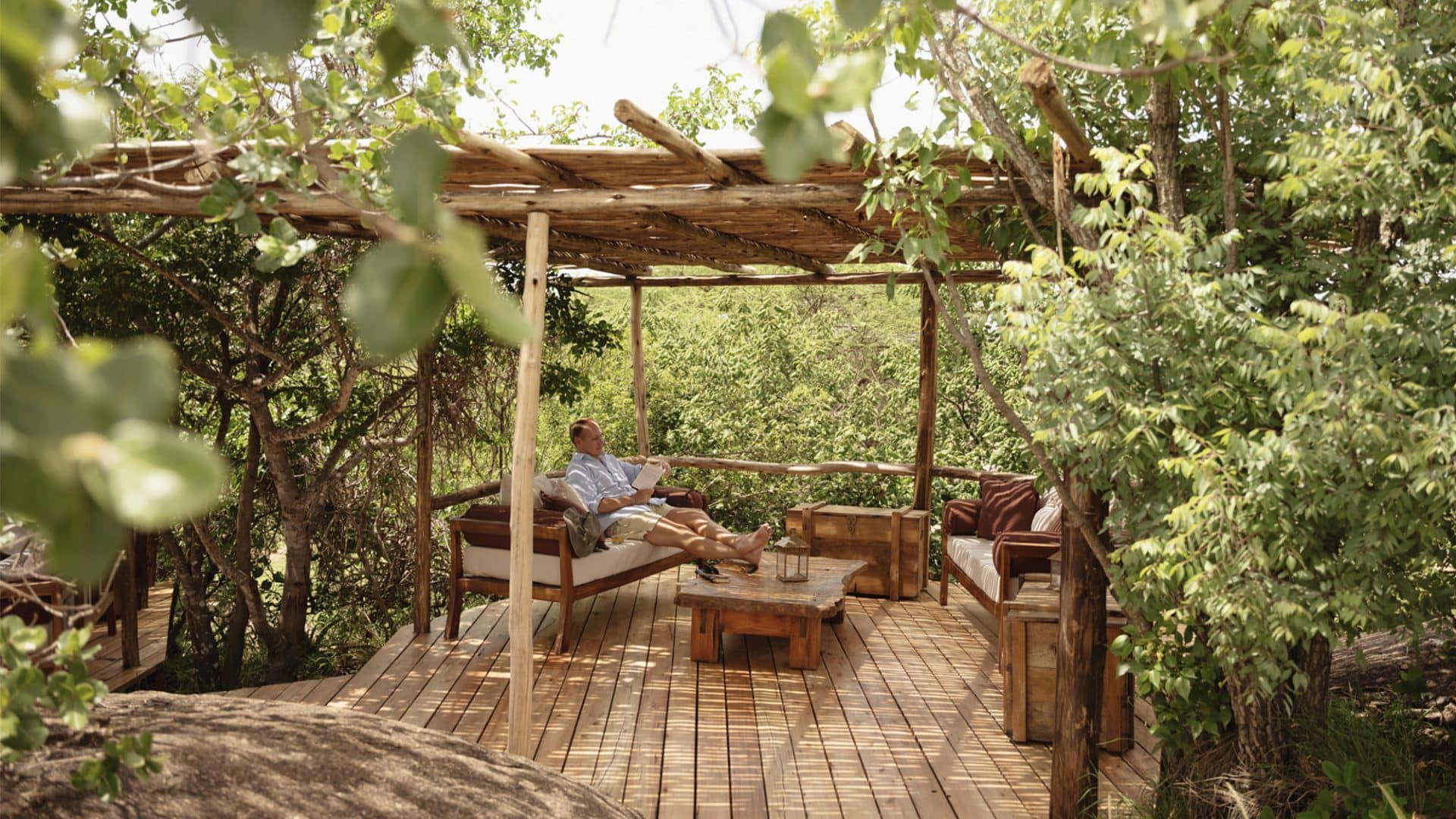
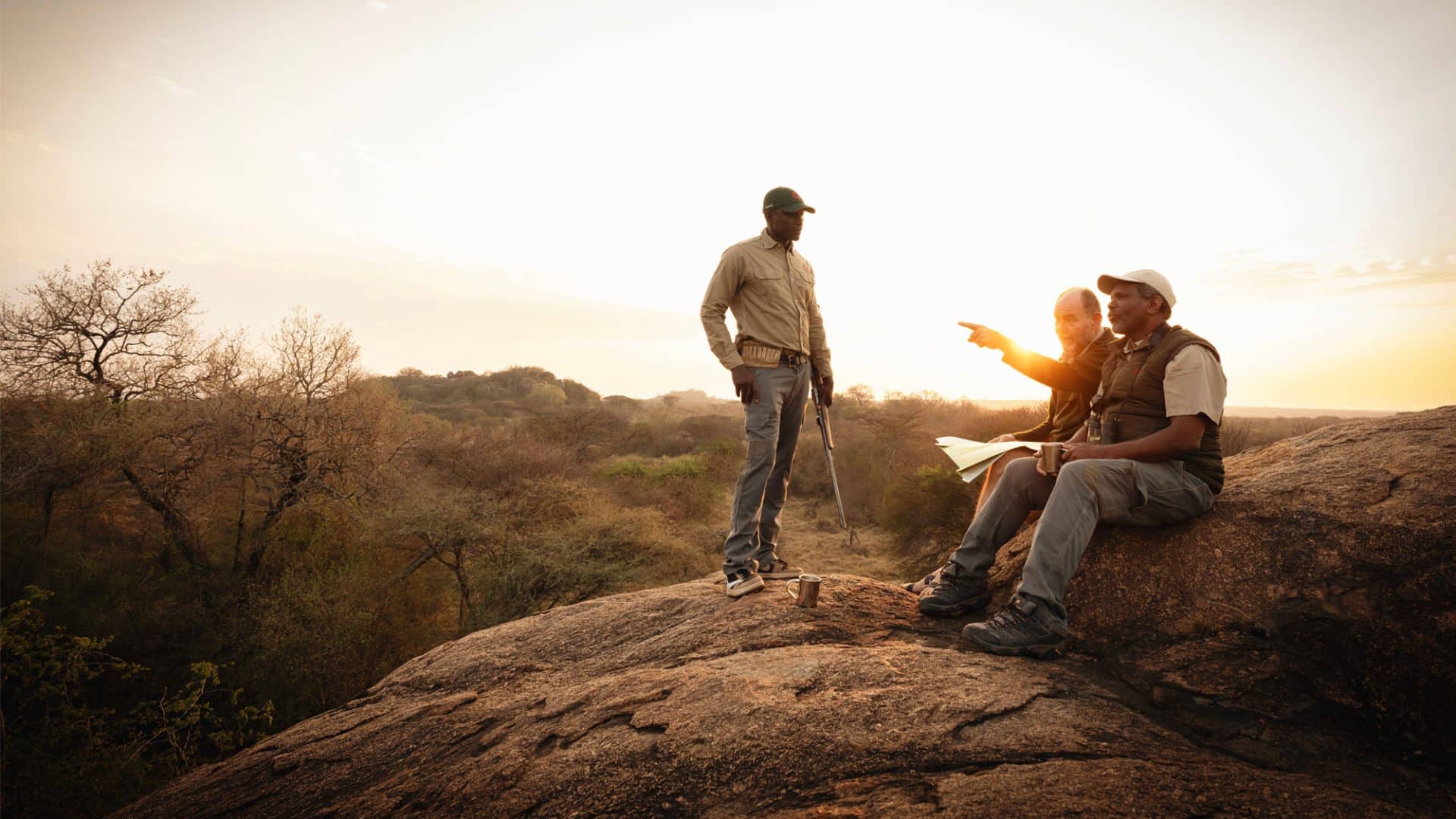
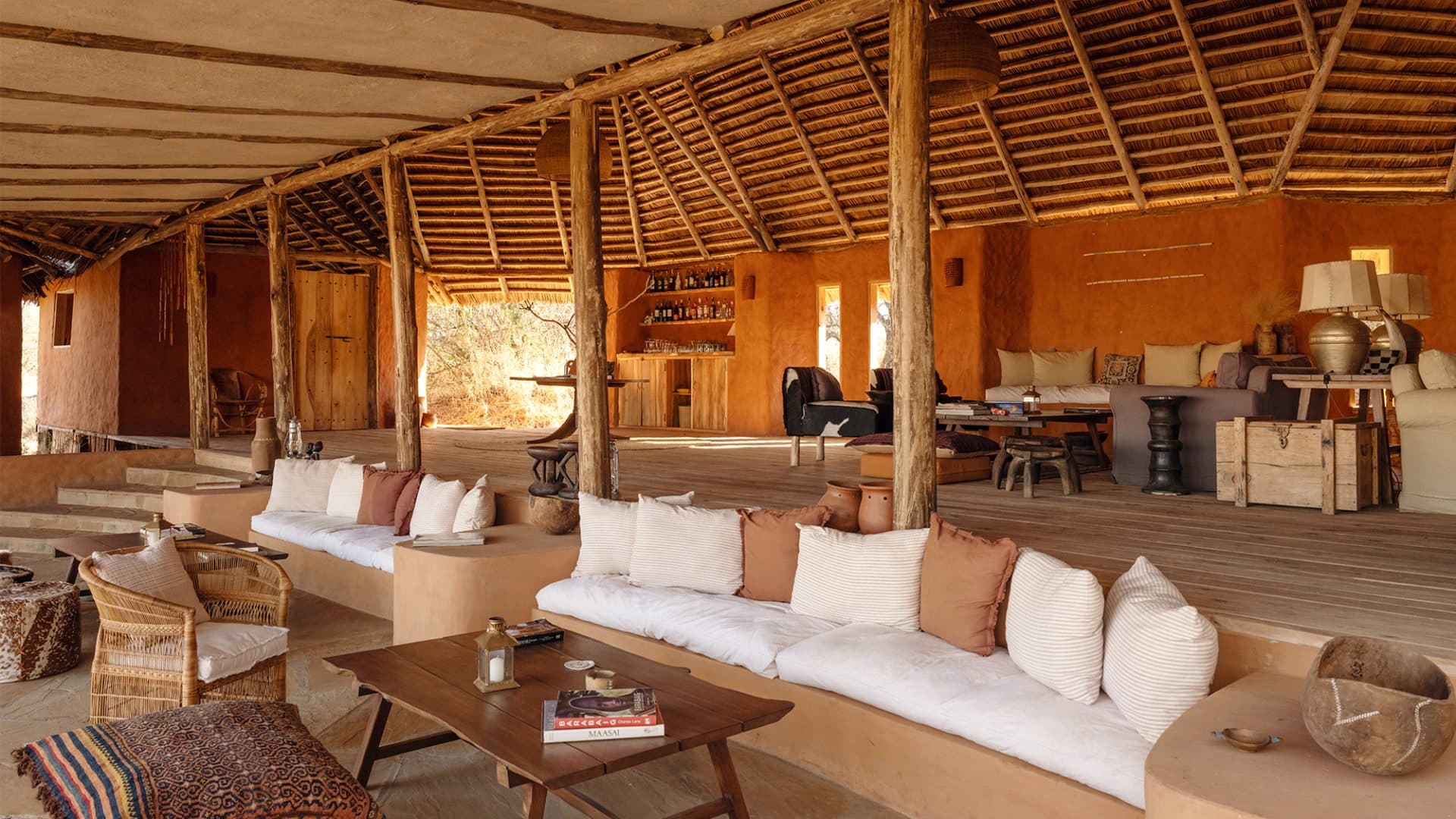
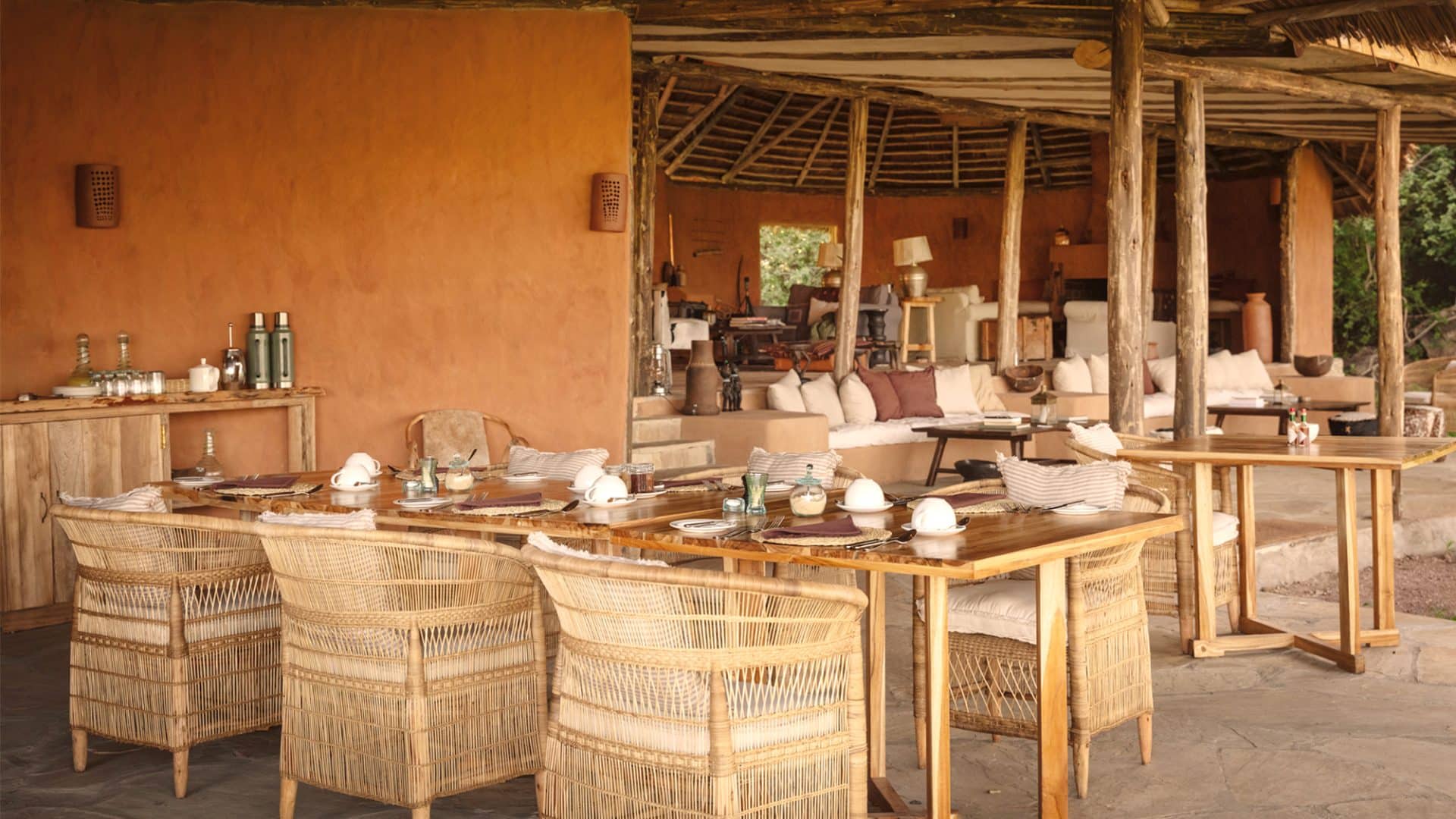
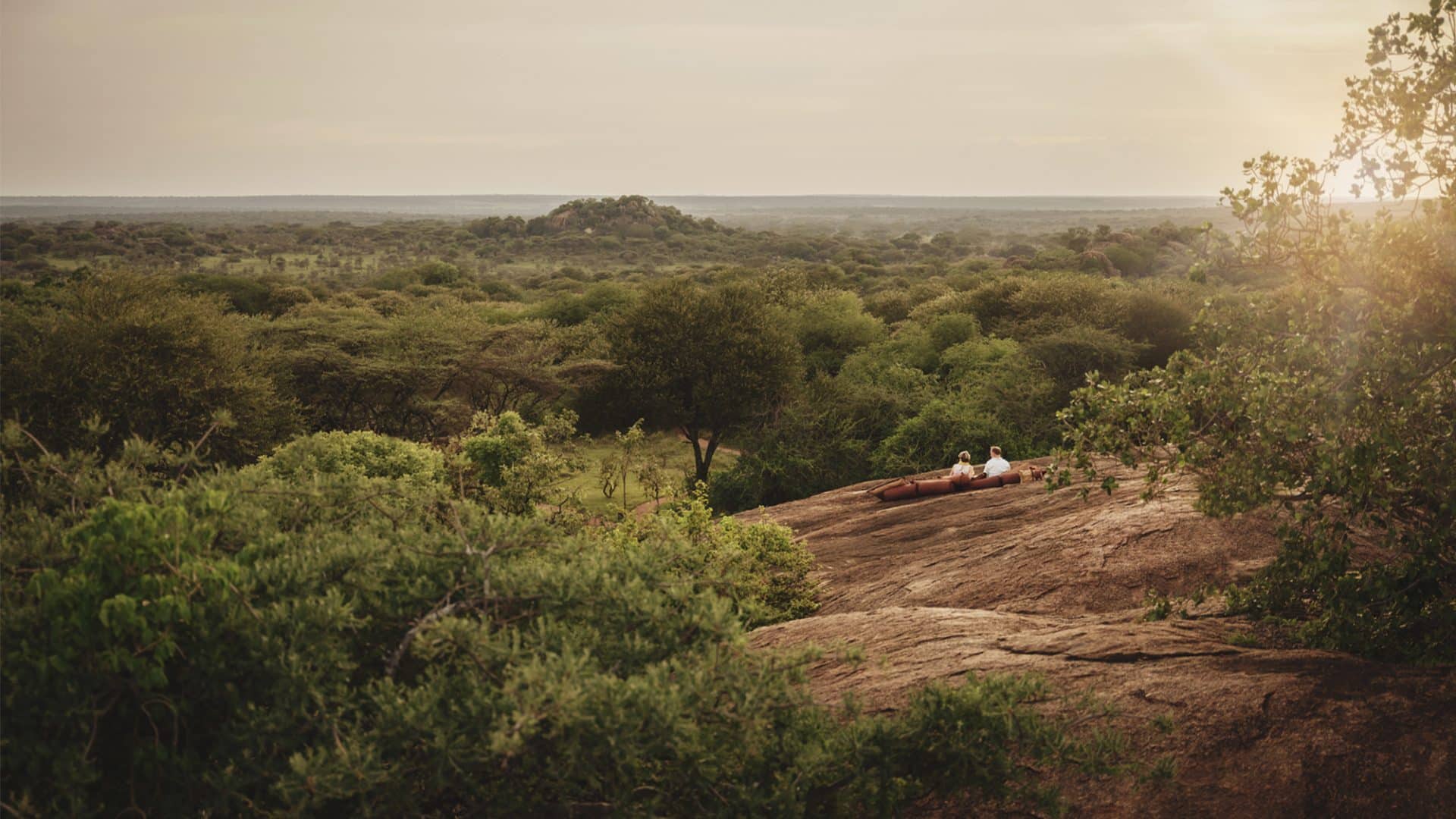
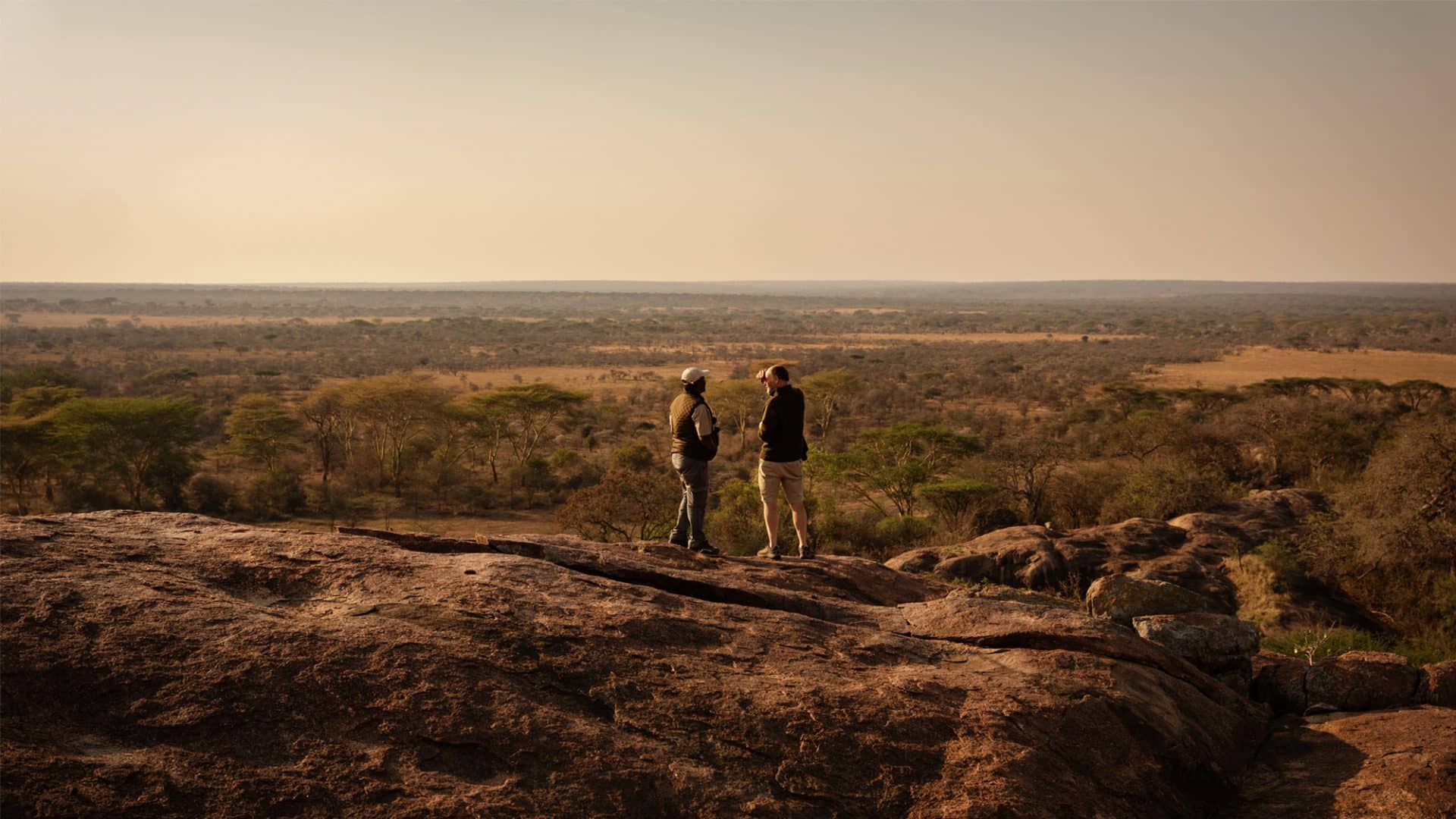
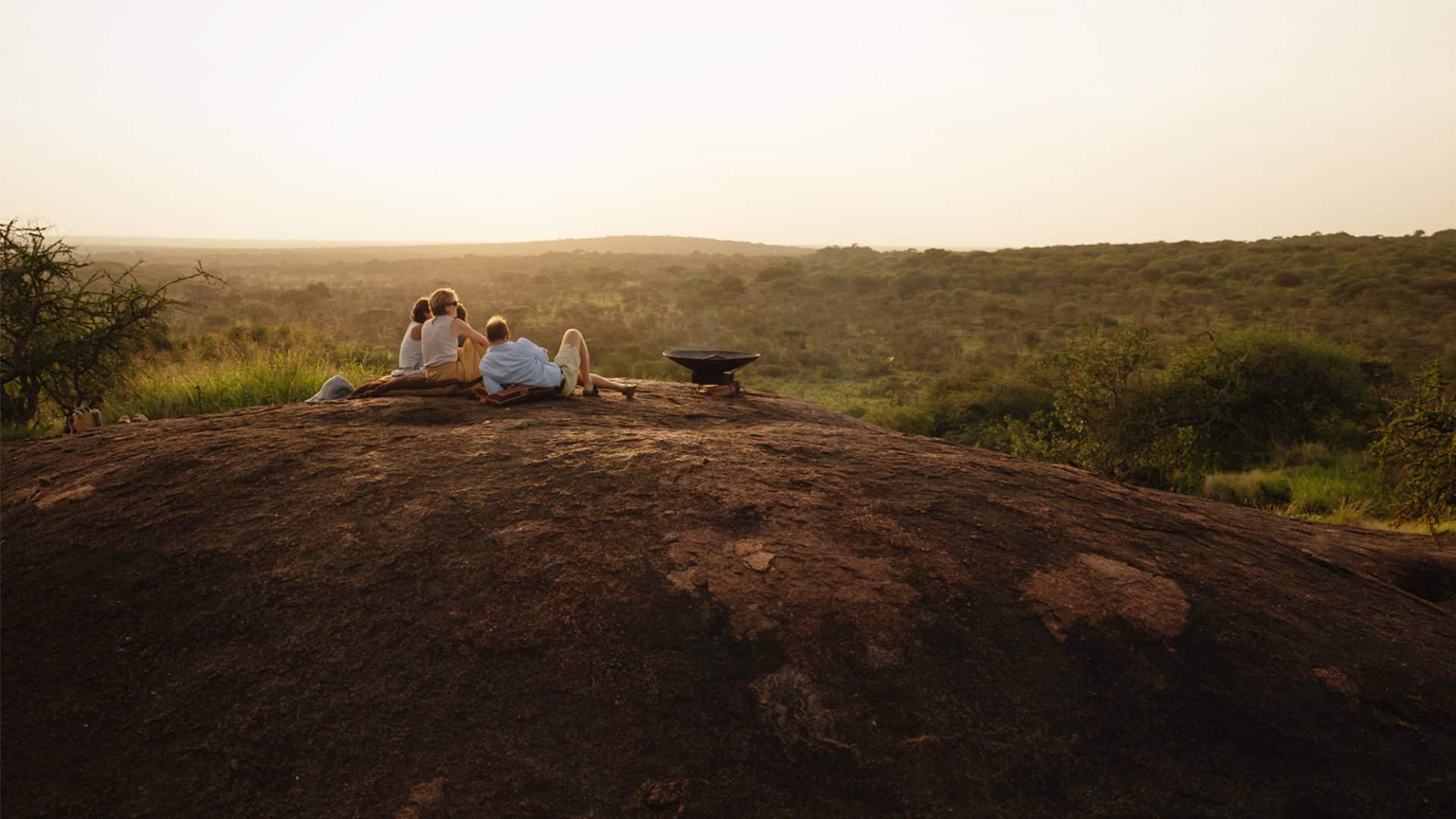
The main area sits on a live-in kopje above the tents, with a lounge, dining area, and bar opening onto far-reaching views over the woodland and plains. An hour before dusk a small bar is set up on the top of the rock for sundowners, and a campfire is lit below it before dinner. Meals are fully inclusive with all drinks except premium labels: a cooked-to-order breakfast, bush lunches on the game drive, and a three-course dinner by candlelight with a weekly barbecue. Nomad brings its signature activities here too, with walks at dawn across the kopjes and through the whistling-thorn woodland, kopje climbing for the view, and stargazing from the rock. The camp is unfenced, Maasai askaris escort you to your tent after dark, and the closest lodge is well over an hour away, so expect to have this slice of the Serengeti to yourself.
Location
- The Southwest Corner of the Park: Kusini sits at about 5,500 feet in the southwestern corner of Serengeti National Park, discreetly tucked among the kopjes in a scenic wooded area just inside the woodland-plains border. This is a beautiful and seldom traveled part of the Serengeti: the Kusini airstrip is 15 minutes from camp, the nearest other lodge is well over an hour away, and the Maswa Game Reserve lies just to the west.
- On the Calving Grounds: Just east of camp are the short-grass plains where the migration gathers to calve from December through March, and the herds often graze on the Kusini plains and in the Kusini Crater within sight of the game drive tracks.
- The Whole South on a Full Day: Many areas of the southern and eastern plains can be reached on an all-day game drive, including the Kusini Plains, Ndutu, Hidden Valley, The Triangle, Naabi Hill, and the Gol Kopjes.
- Moru to the North: The Moru Kopjes, with the Serengeti’s only black rhino, are about an hour and a half north and make a fine full day.
- Getting There: On our green season itineraries guests fly into the Seronera airstrip and work south through the central Serengeti before reaching Kusini by road, or fly directly into the Kusini airstrip on a scheduled charter. From Kusini the route to the Ngorongoro Crater runs east across the plains past Ndutu and Olduvai Gorge, a full game-viewing day. We use Kusini from December through March.
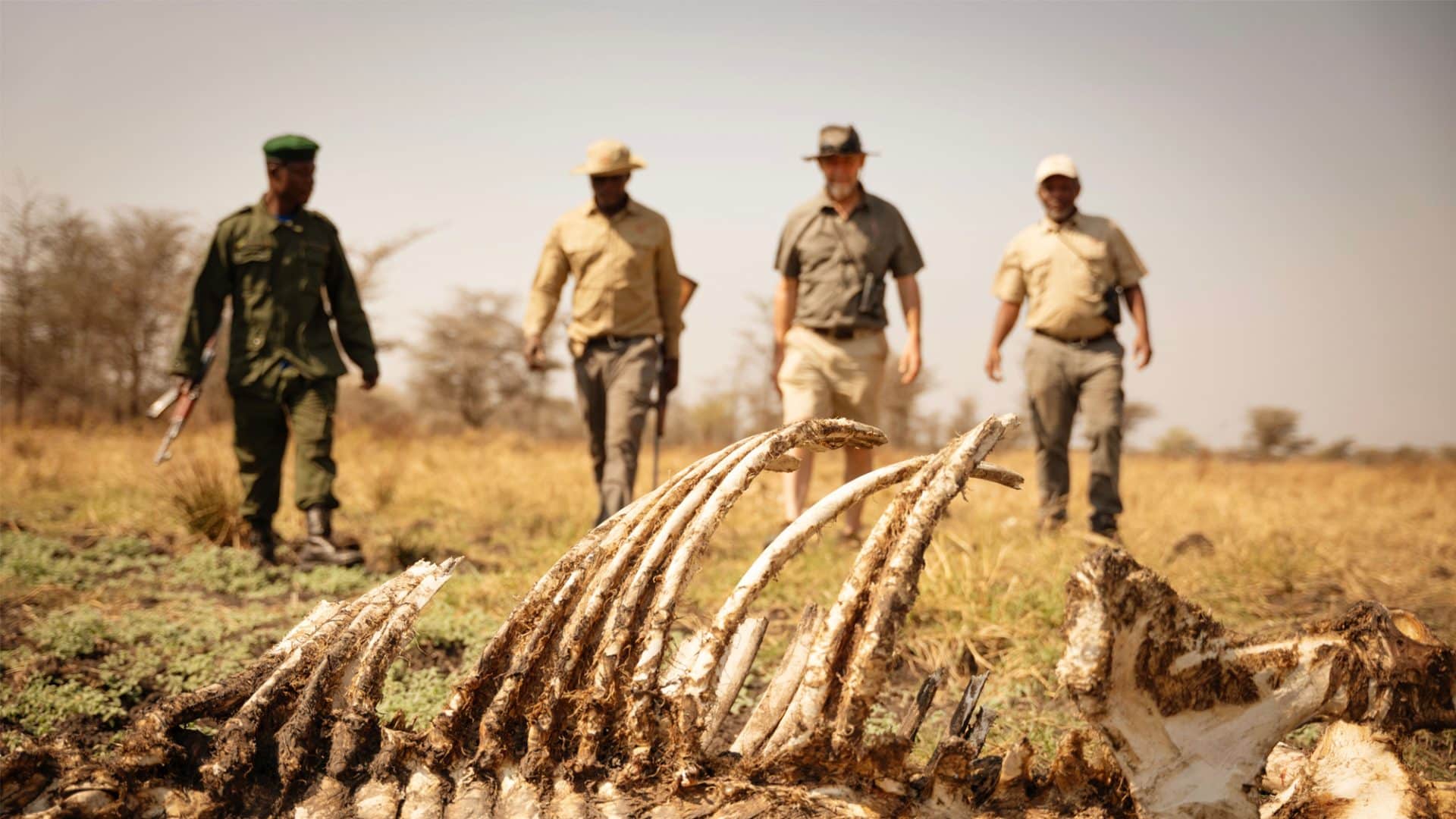
The camp is unfenced. Buffalo, impala, vervet monkeys, and baboons live around the tents, lions call at night, and the woodland behind camp is home to the rare striped hyena.
Calving Season Country
Kusini gives you the calving plains of the southern Serengeti on one side and the quiet western woodlands on the other, with the park’s most remote corners reachable on full days out.
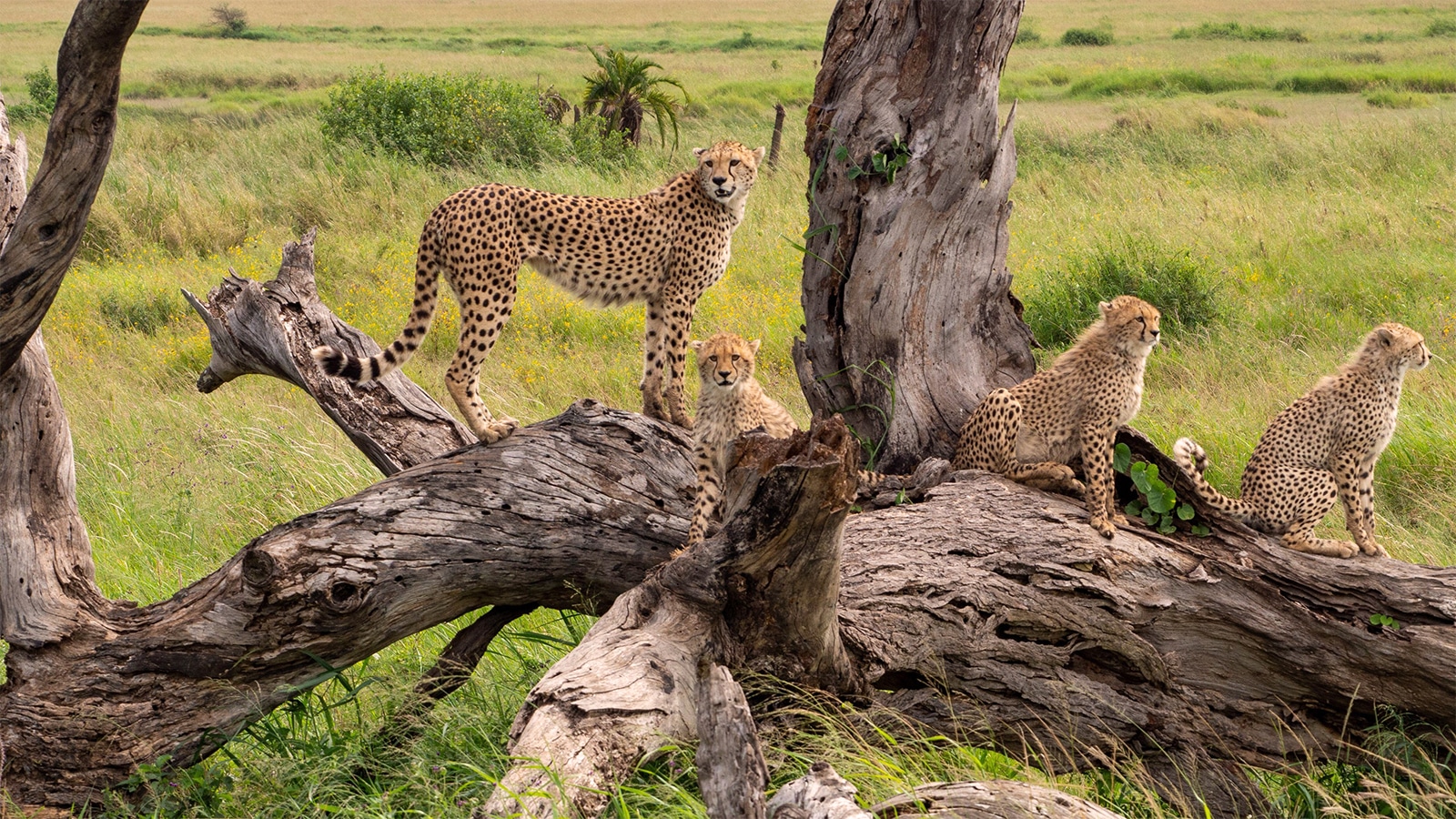
- Kusini Plains: The 60 square miles around camp are a transition zone between the open plains and the western woodlands, a remote, seldom traveled area of long-grass plains, rolling hills, granite kopjes, and perennial springs that keep it green when the rest of the plains dry out. Its centerpiece is the Kusini Crater, a circular grassy plain ringed by acacias that works as a natural amphitheater for wildlife, where cheetah gather along the forest edge and the grazing succession plays out in full view: elephant and buffalo trample the coarse grass, zebra and wildebeest follow, and gazelle and warthog finish. Two resident lion prides live here, and the larger one, usually near the airstrip, numbers well over 20. The woodlands support the extremely rare striped hyena alongside its larger spotted cousin, and from October to April hundreds of thousands of white storks arrive from Europe and Russia to feed on the grasshoppers.
- Lake Ndutu: East of camp, Ndutu is an island of dense acacia woodland surrounded by an ocean of grass, set around two soda lakes, Ndutu and Masek, and the base for filmmakers, photographers, and researchers since Jane Goodall and Hugo van Lawick studied wild dogs and hyenas here in the 1960s. From December to April the migration arrives on the mineral-rich plains to calve, with February the peak, and the herds pour over the plains like a giant lawnmower, crossing the shallow lake in lemming-like columns even though they could walk around. Ndutu has one of the Serengeti’s largest elephant populations, the Masek lion pride rests on the dry lakebeds, and leopard, caracal, and striped hyena live in the woodland.
- Hidden Valley: A well-kept secret about 14 miles northwest of Ndutu and far from any official road, Hidden Valley is a five-square-mile depression in the short-grass plains where rainwater collects in the green season into a muddy waterhole ringed by low shrubs. Large spotted hyena clans, sometimes dozens strong, wallow and socialize in the shallows, lion and cheetah use the shrubs as cover to ambush zebra and gazelle at the water’s edge, and at the peak of the green season black rhino occasionally wander in from Moru. Access is sometimes restricted to protect it, which is exactly why so few vehicles ever see it.
- The Triangle: The wedge of short-grass plains between Ndutu, Naabi Hill, and the Kusini woodlands is the heart of the calving grounds, where the biggest concentrations of wildebeest gather from January to March and the cheetah of the southern plains do their hunting in the open. With off-road driving permitted in the Ndutu area, this is where the green season’s great predator sightings happen.
- Gol Kopjes (Full Day): Far to the east on the short-grass plains, the Gol Kopjes are the cheetah capital of Africa, a scatter of granite islands in a sea of grass where the cheetah use the rocks as lookouts and the open ground to run. In the green season the migration spreads across the plains around them, and the drive out past Naabi Hill crosses the herds the whole way.
- Moru Kopjes (Full Day): About an hour and a half north, the most extensive kopjes in the park rise out of golden grassland in what Kay Turner called the most beautiful scenery in the Serengeti. Moru is the park’s last stronghold of the black rhino, a population rebuilt from two survivors to around 20 under round-the-clock protection, with the Maasai rock paintings and Gong Rock a short climb up the rocks. In November and June the herds pass through on their way south and north.
In Camp
Buffalo and impala below the verandas, vervet monkeys after the morning coffee tray, lions calling from the airstrip pride at night, and the occasional striped hyena in the headlights on the drive back to camp.
Six Tents Under the Trees
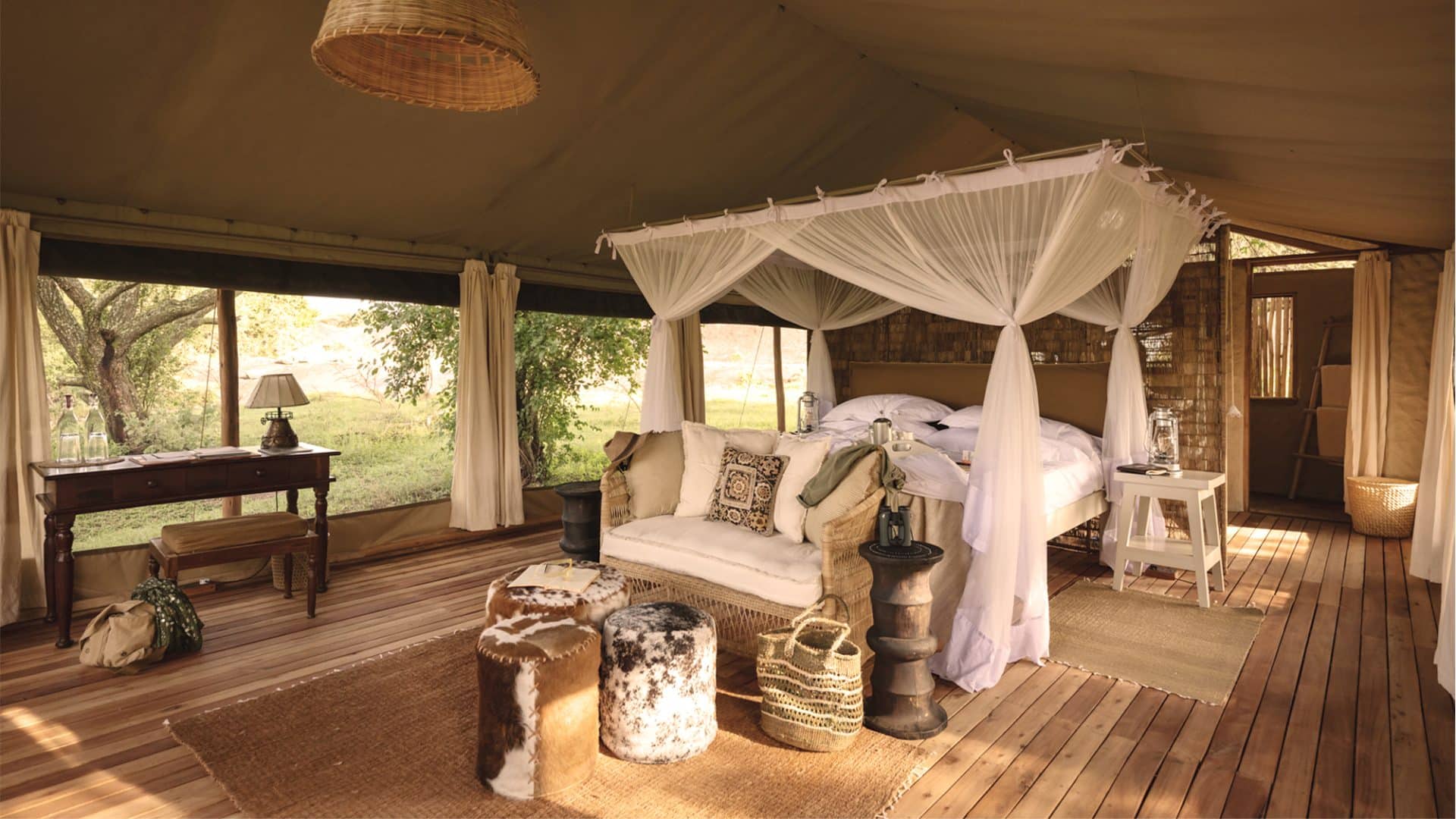
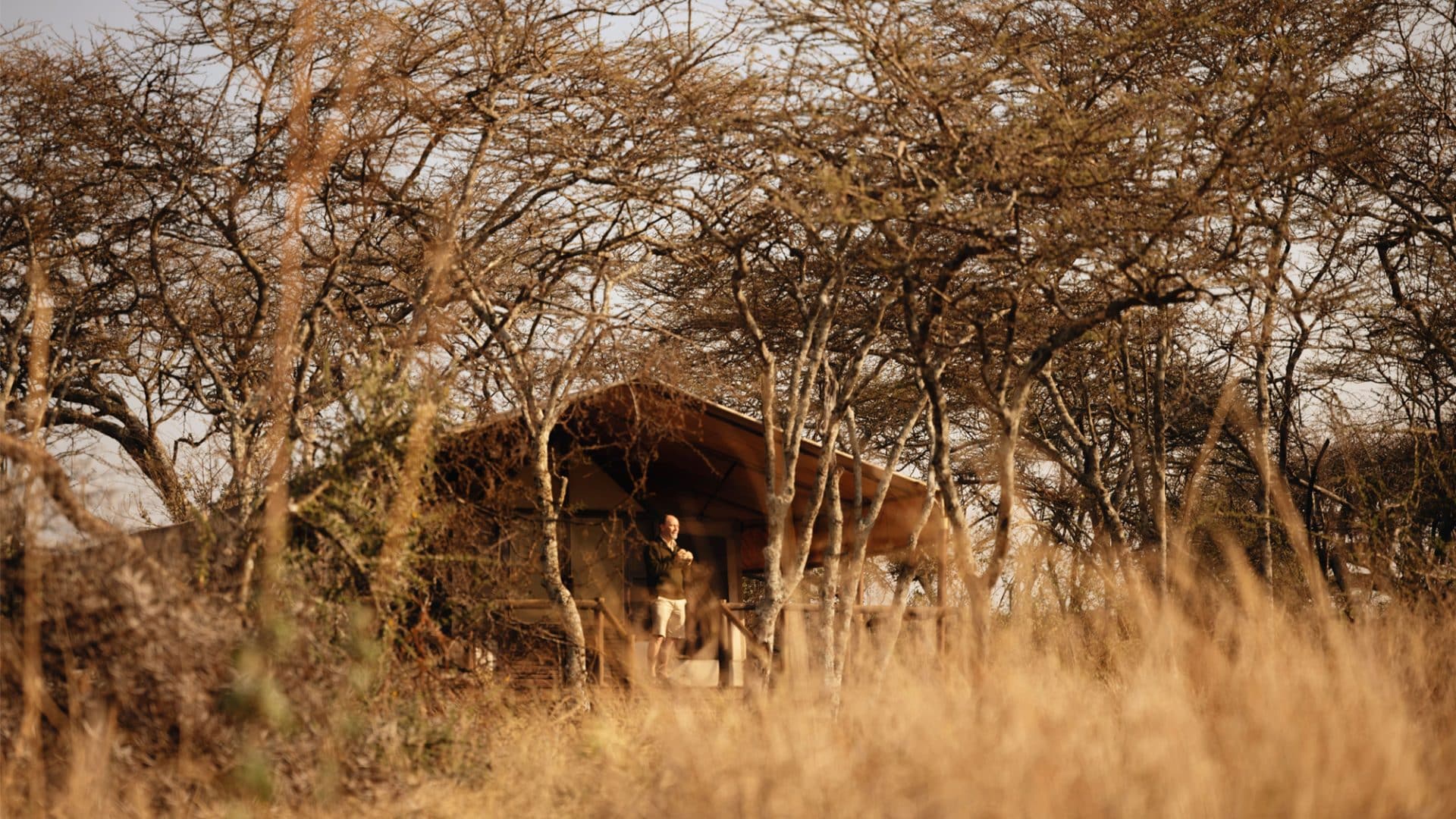
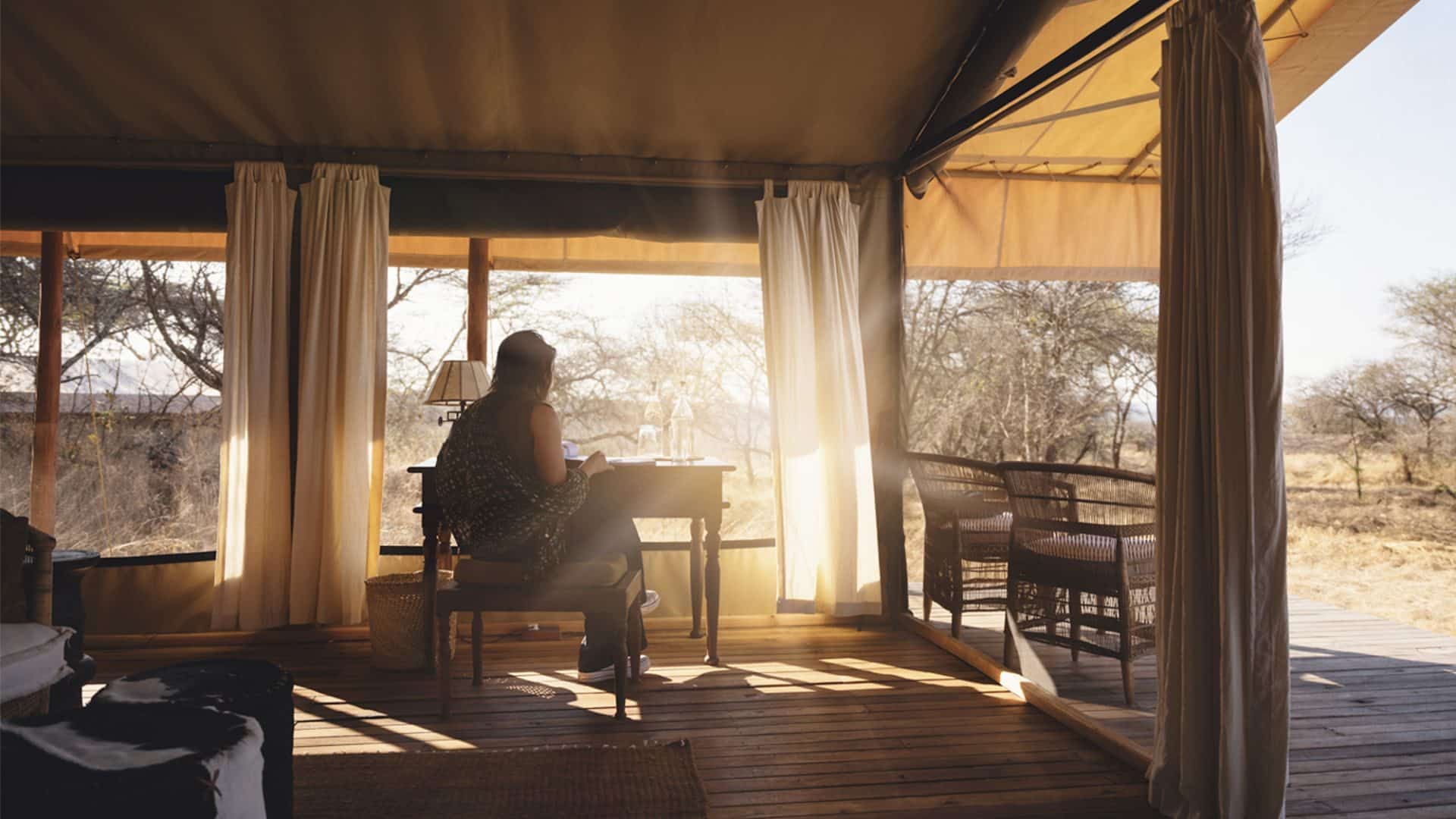
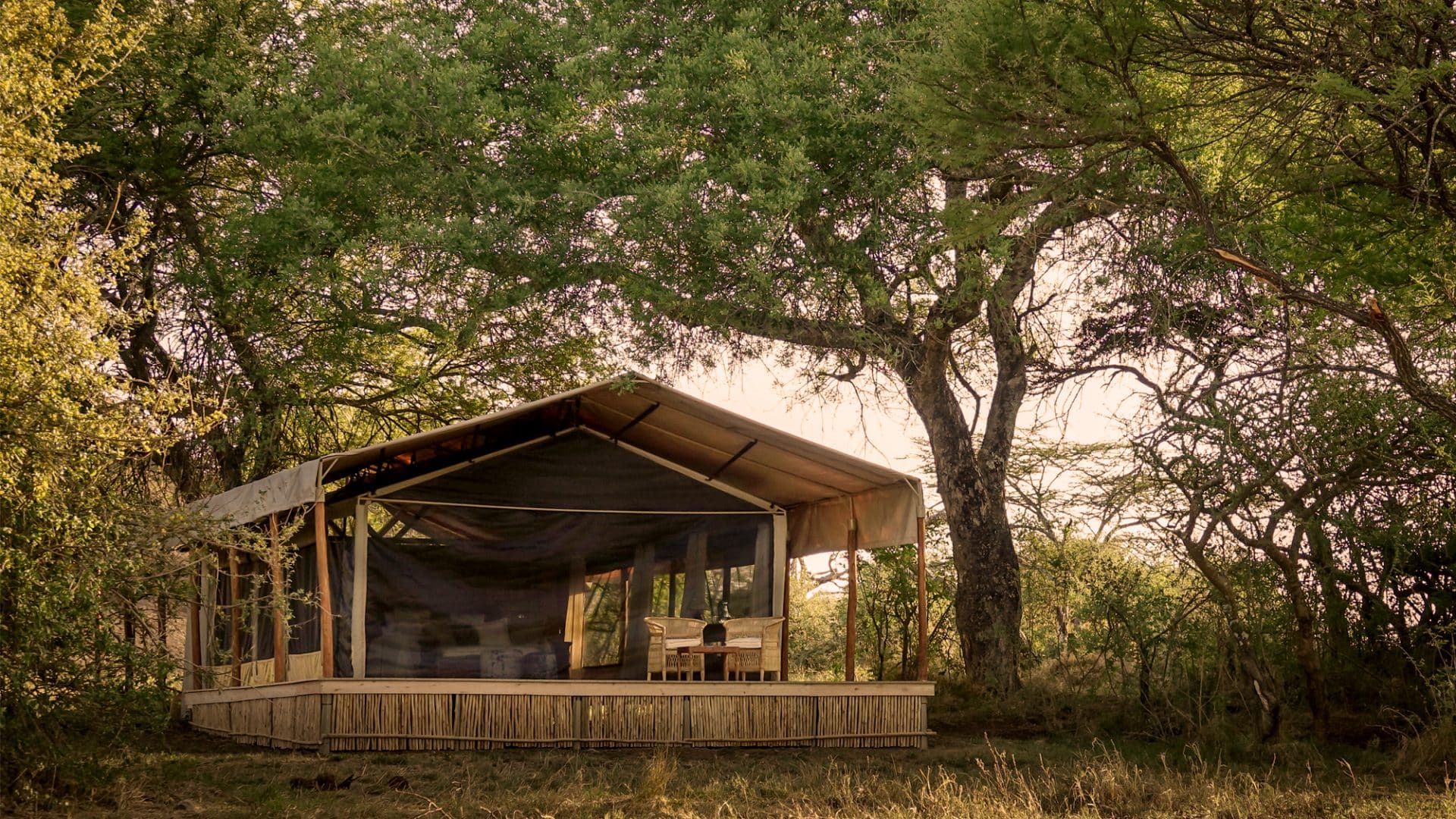
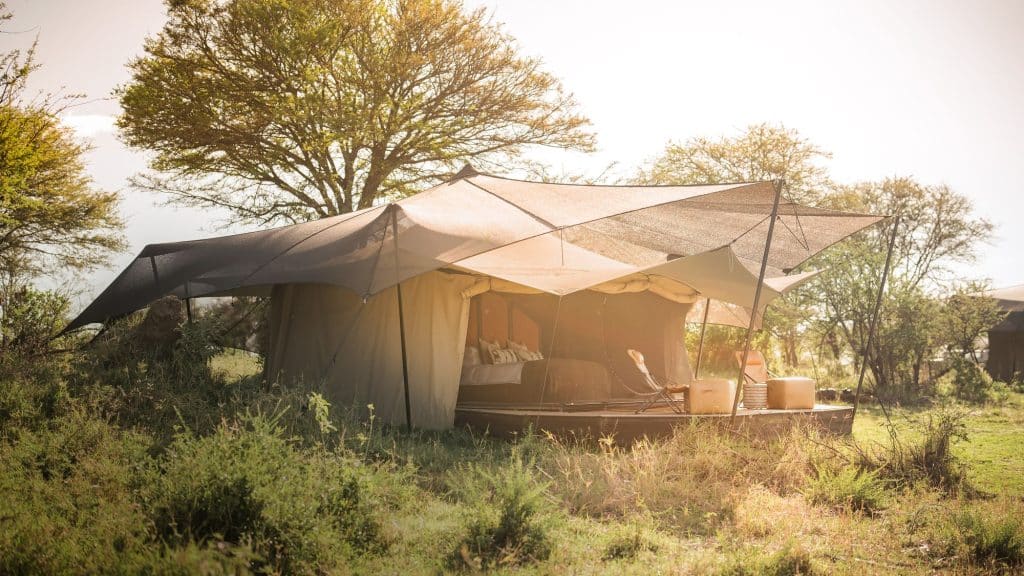
Kusini has six safari tents, each raised on a polished wooden deck and spaced through the acacias at the foot of the kopje for complete privacy.
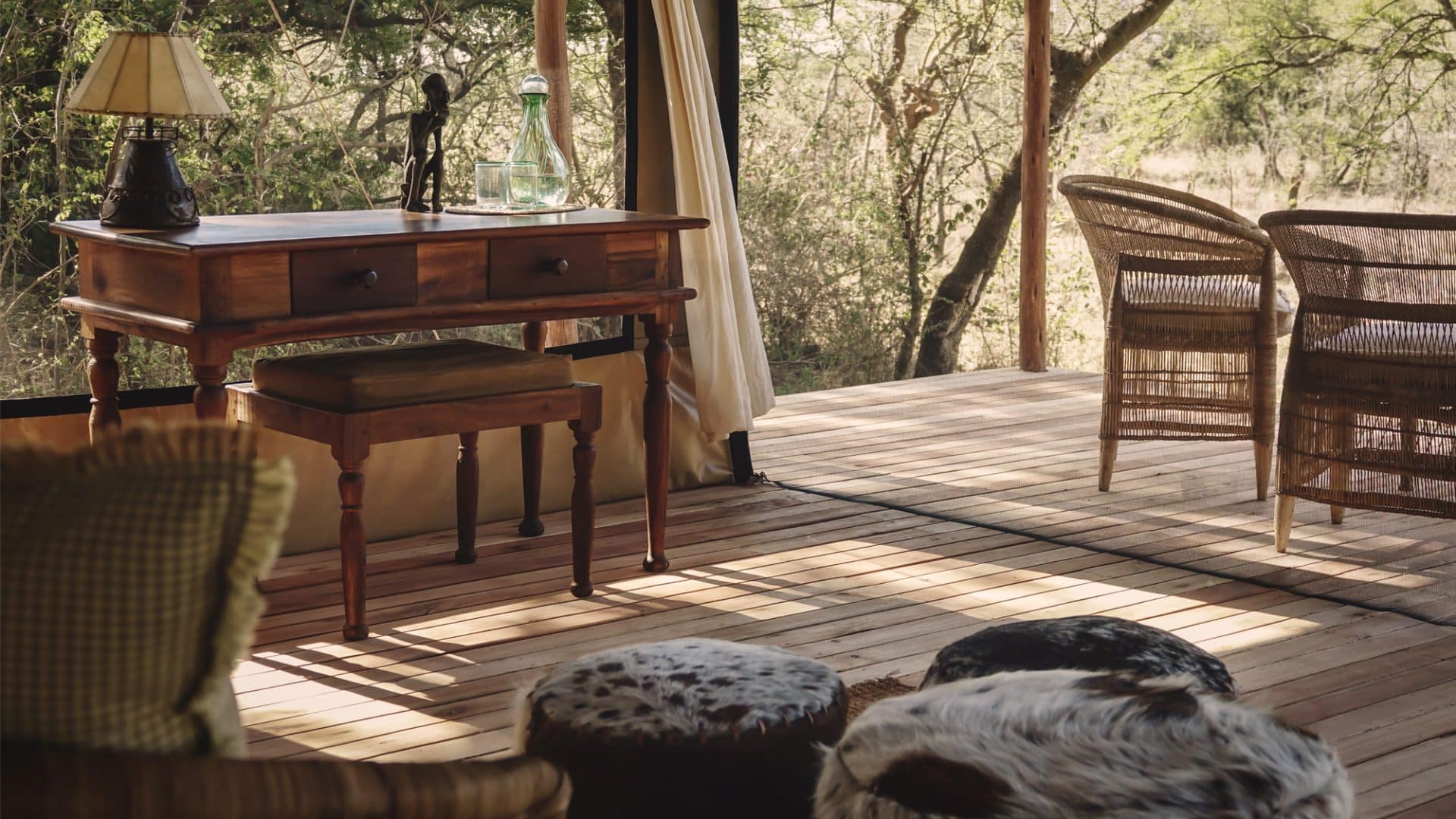
- Safari Tents (6): Describing them as tents is a little misleading; think of them as cabins under canvas. A very large double bed that splits into twins under a mosquito net, hardwood furnishings in classic safari style, an armchair, dressing table, and lockable trunk, and an en-suite bathroom at the back with twin basins, a separate flush toilet, and a plumbed shower. The raised private veranda at the front, with lounging chairs looking out over the bush, is the best seat in camp for buffalo, impala, and monkeys after the game drive.
- Triples and Families: No dedicated family tents; up to two tents can be made up as triples with an extra bed. Children from age eight.
- In Every Tent: 24-hour solar power with charging points, limited WiFi, electric safe, bathrobes and slippers, Molton Brown and Africology toiletries, drinking water, and Wellington boots and umbrellas for the green season rains. No fans or air conditioning; the elevation keeps nights cool.
Amenities
- Fully Inclusive: All meals and all drinks, including house wines, beers, and spirits, with only premium labels extra. Laundry included.
- Dining on the Kopje: A new mess area built into the rock with a lounge, bar, and dining area opening onto the view. Cooked-to-order breakfasts, bush lunches on the game drive or hot lunch in camp, and a three-course candlelit dinner with a weekly barbecue; vegetarian dishes available.
- Sundowner Rock: An hour before dusk a bar is set up on top of the kopje beside the lounge for sundowners with the other guests as the sun goes down over the woodlands.
- Campfire: A blazing fire with appetizers and drinks before dinner, and the place to sit afterward under the stars.
- Walking Safaris: Nomad’s walks at dawn across the kopjes and through the whistling-thorn woodland, for guests 12 and over.
- Kopje Climbing and Stargazing: Guided scrambles up the granite for the view, and stargazing from the rock with no light for 50 miles.
- Bush Meals: Picnic breakfasts and lunches on the plains, and bush dinners under the stars.
- Balloon Safaris: Green season balloon flights over the southern plains can be arranged in advance.
- Practical Comforts: WiFi in the main area, 24-hour security, Maasai askari escorts after dark, first-aid trained staff with Flying Doctors access, and a small gift shop.
- Season: Open all year; we use Kusini from December through March.
Nearby Attractions


Seasonal Highlights
| Month | Season | Weather | Wildlife Sightings | Rec. |
|---|---|---|---|---|
| Jan | Green Season | 60 - 85 F Mostly sunny with few showers |
Wildebeest Migration and Zebra Migration, Lion, Cheetah, Elephant | Yes |
| Feb | Green Season | 60 - 85 F Mostly sunny with few showers |
Wildebeest Migration and Zebra Migration, Lion, Cheetah, Elephant, Wildebeest Calving | Yes |
| Mar | Green Season | 60 - 83 F Mostly sunny with few showers |
Wildebeest Migration and Zebra Migration, Lion, Cheetah, Elephant | Yes |
| Apr | Green Season | 60 - 83 F Mostly sunny with few showers |
Wildebeest Migration and Zebra Migration, Lion, Cheetah, Elephant | Yes |
| May | Northward Migration | 56 - 81 F Mostly sunny |
Wildebeest Migration and Zebra Migration, Lion, Cheetah, Elephant | Yes |
| Jun | Beginning of Dry Season | 56 - 81 F Mostly sunny |
Wildebeest Migration and Zebra Migration, Lion, Cheetah, Elephant (early June only) | Yes |
| Jul | Dry Season | 60 - 83 F Mostly sunny |
- - - - - | No |
| Aug | Dry Season | 55 - 81 F Mostly sunny |
- - - - - | No |
| Sep | Dry Season | 55 - 81 F Mostly sunny |
- - - - - | No |
| Oct | Dry Season | 60 - 83 F Mostly sunny |
- - - - - | No |
| Nov | Southward Migration | 60 - 83 F Mostly sunny with few showers |
Giraffe, gazelle, Walking Safaris and Cultural Interactions | Yes |
| Dec | Beginning of Green Season | 60 - 83 F Mostly sunny with few showers |
Wildebeest Migration and Zebra Migration, Lion, Cheetah, Elephant | Yes |
Nearby Lodges




What are you waiting for?
Create Your Own Itinerary
Receive instant day-by-day trip details designed just for you including rates, seasonal highlights, guest testimonials, photos & more!
Get In Touch
Our Safari Specialists Are Ready to Help Kickstart Your Adventure
Toll-Free
US Office
609 Deep Valley Drive, Suite 200, Rolling Hills Estates, CA 90274
Hours: Daily 8AM - 8PM PST
Drop Us A Line
Leave your contact info below