Awali Serengeti
Stay on the migration route in May and June at this intimate, eight-tent camp on Rongai Hill, with raised canvas tents, indoor and outdoor showers, four-course dinners, and a lounge deck overlooking the plains.
Details
Small, Owner-Run, and in the Middle of the Park
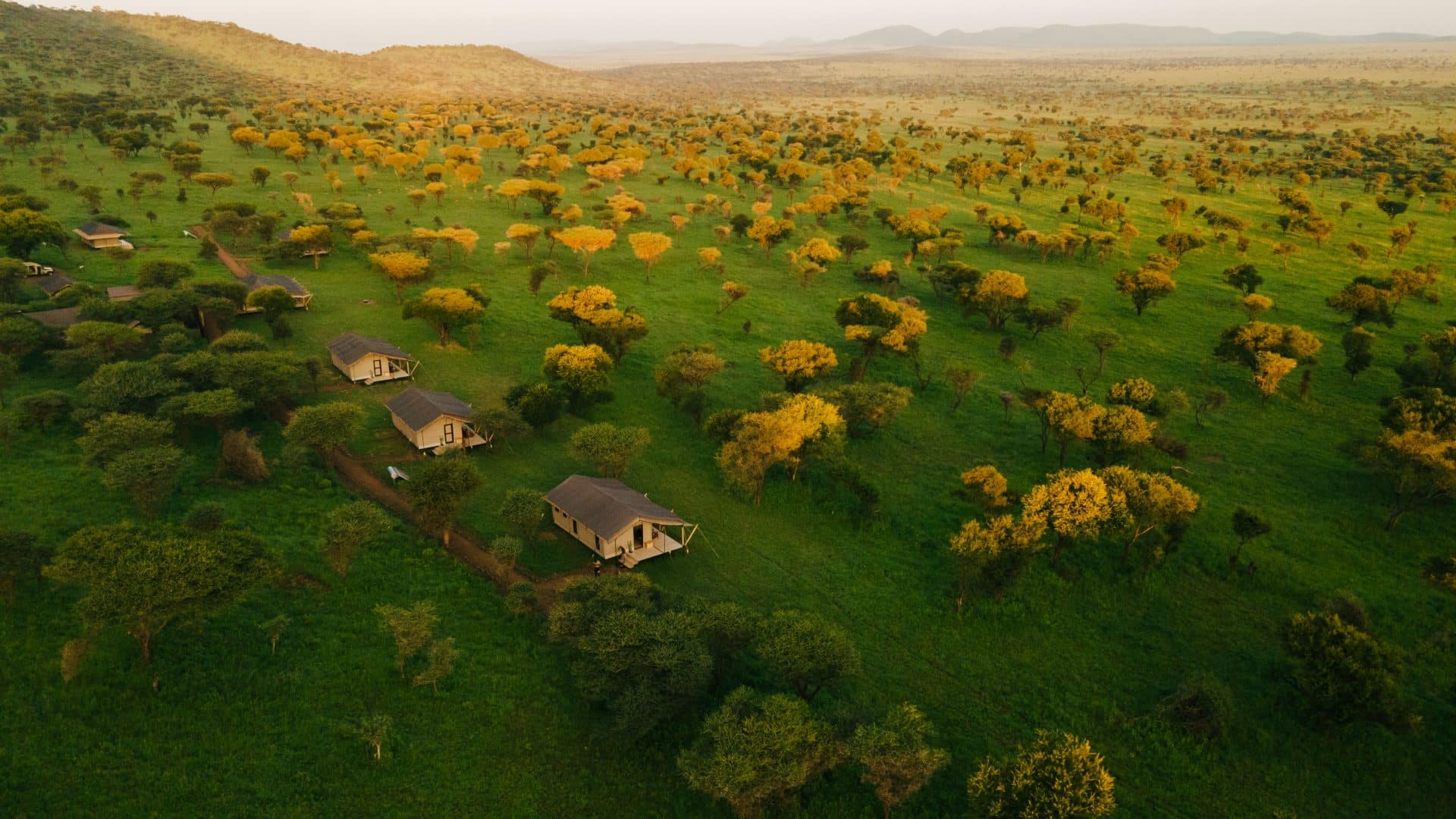
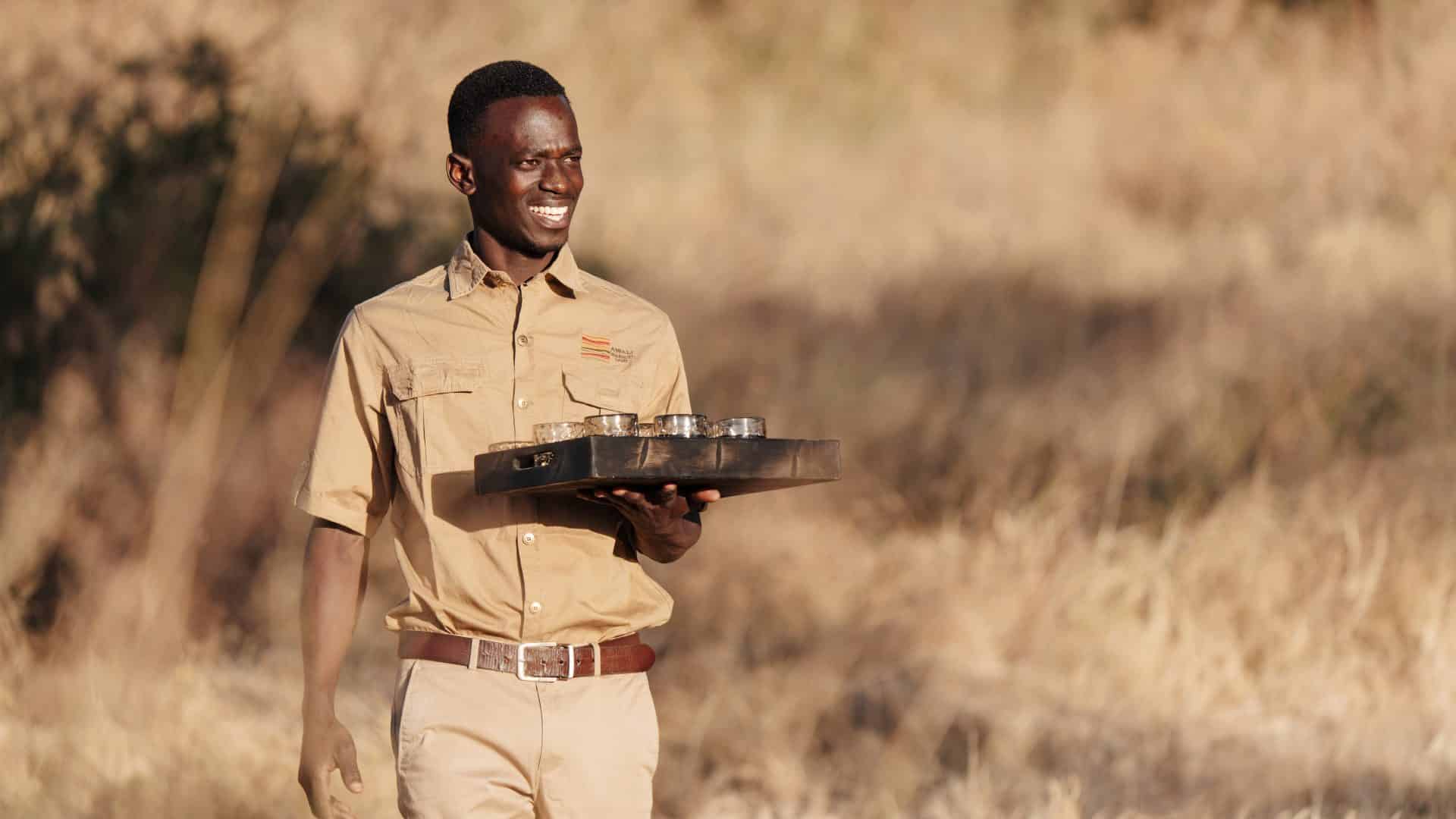
Awali Serengeti Camp is the kind of camp we look for and rarely find: small, owner-run, unfenced, and in the middle of the park. It stands on the slope of Rongai Hill in the Moru country southwest of Seronera, on the old Rongai 12 special campsite, with a view from the lounge deck over a great sweep of the central Serengeti and the migration route below it. The camp is new and has already earned a perfect 5.0 rating on TripAdvisor across more than seventy reviews and a 2026 Travelers’ Choice award, and the reviews say the same three things over and over: the location, the food, and above all the people.
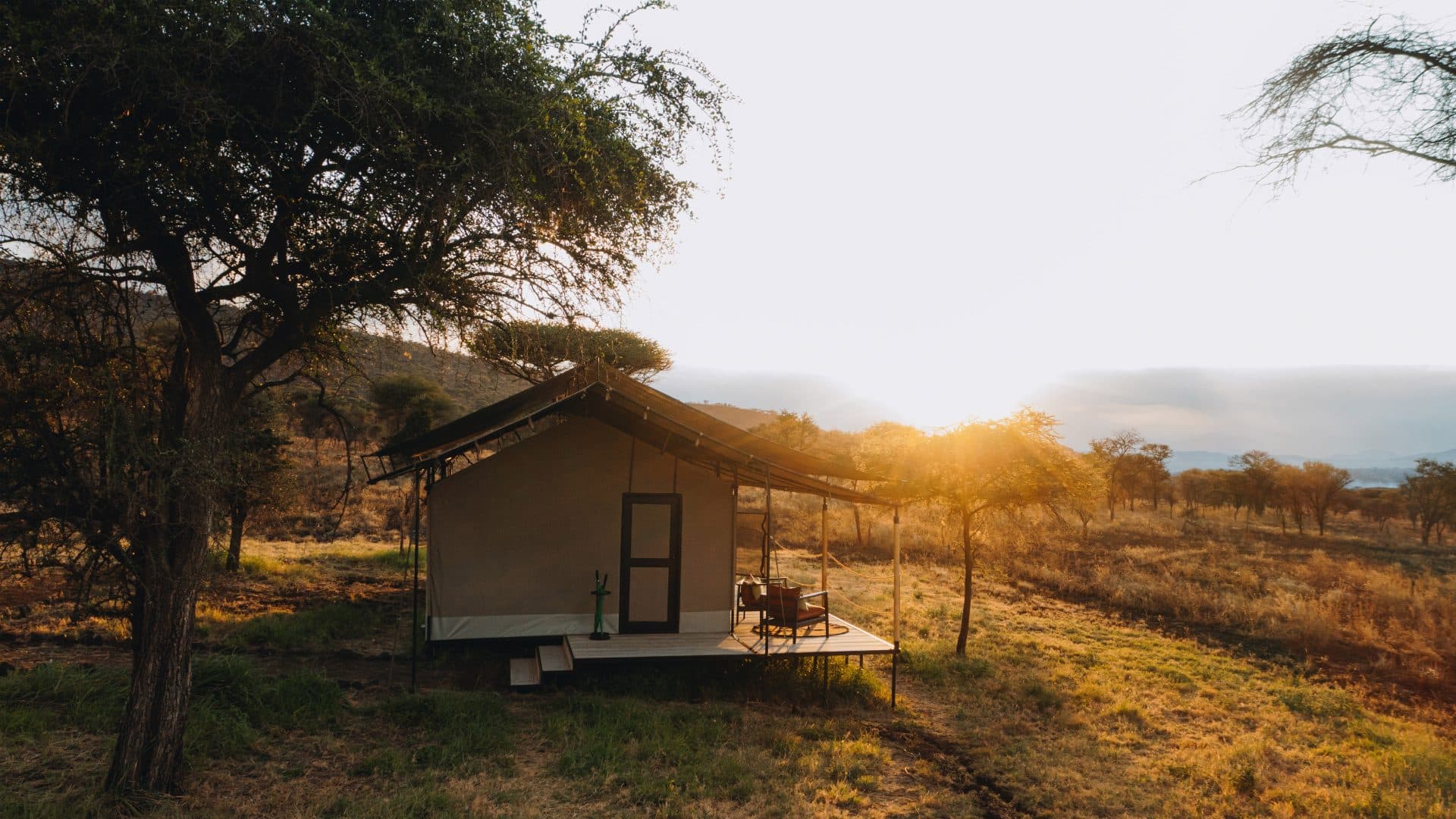
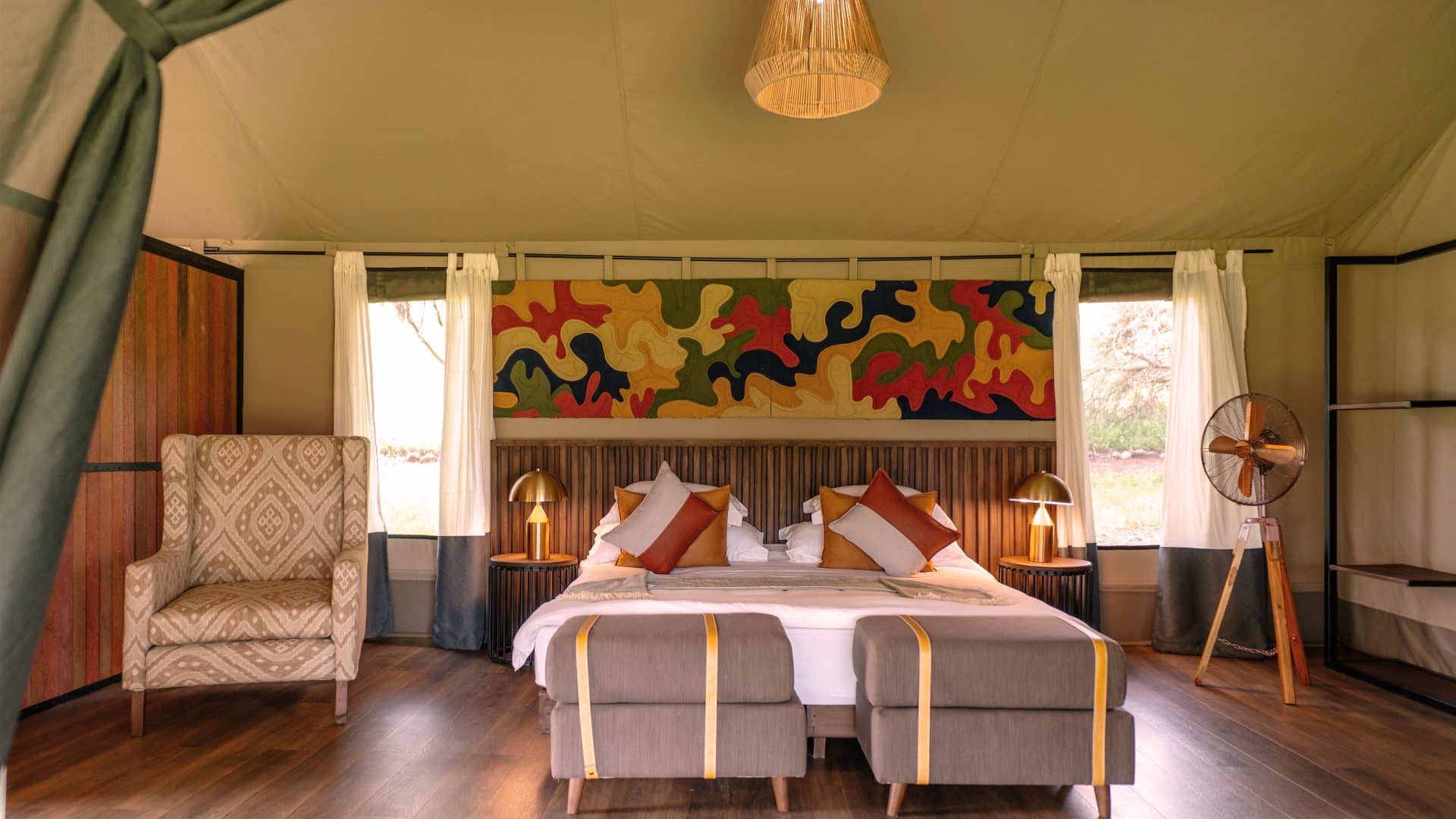
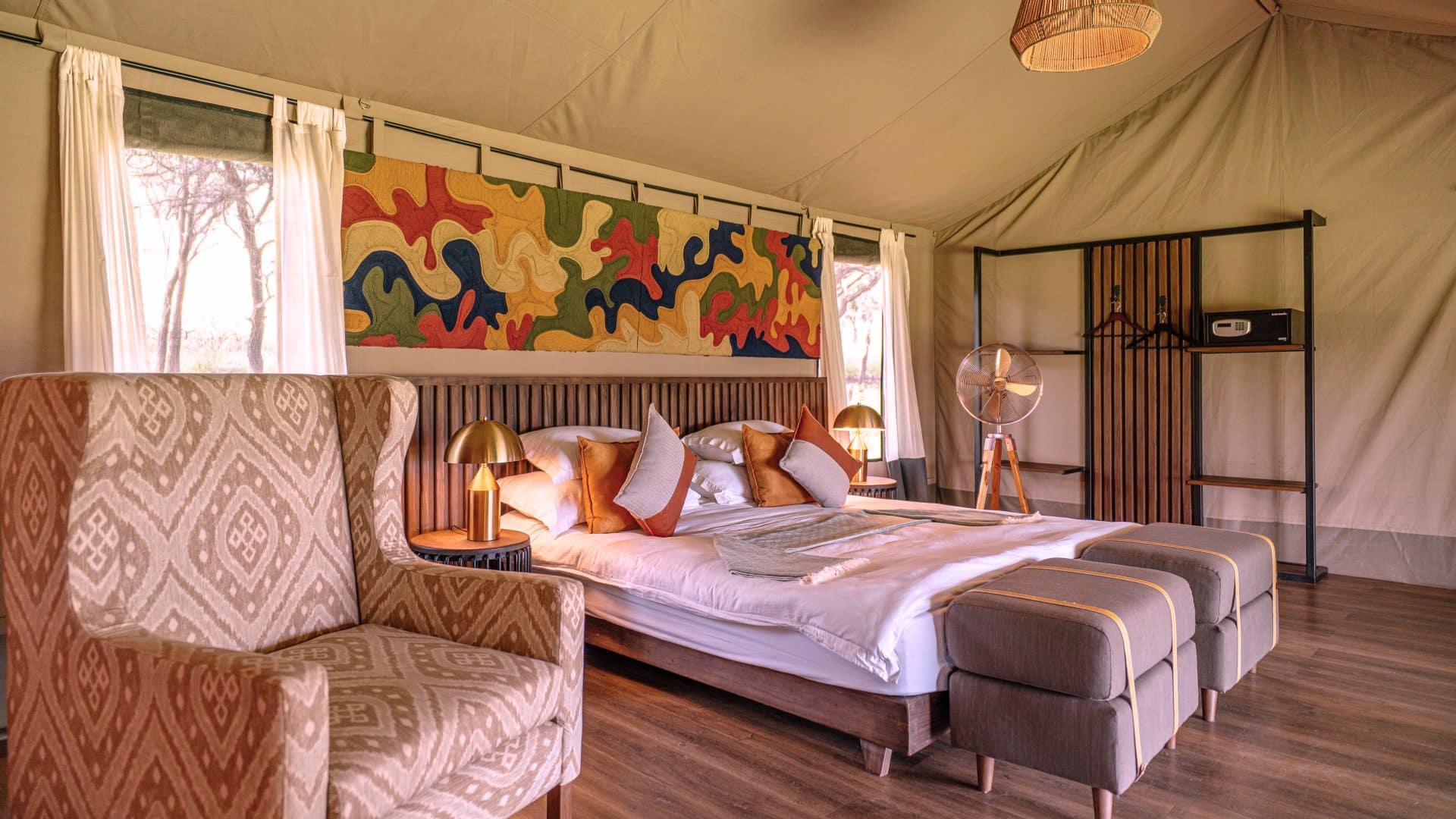
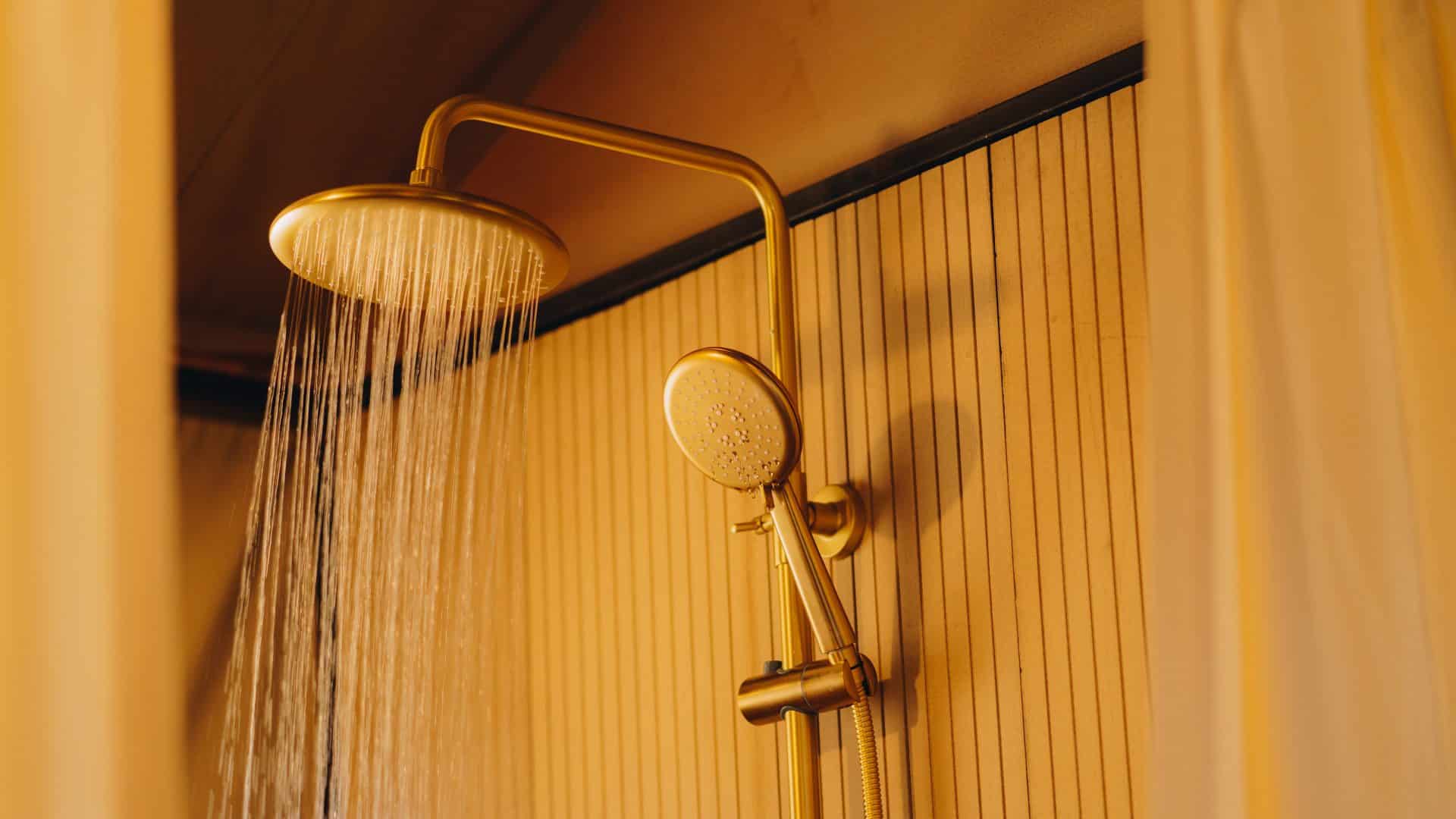
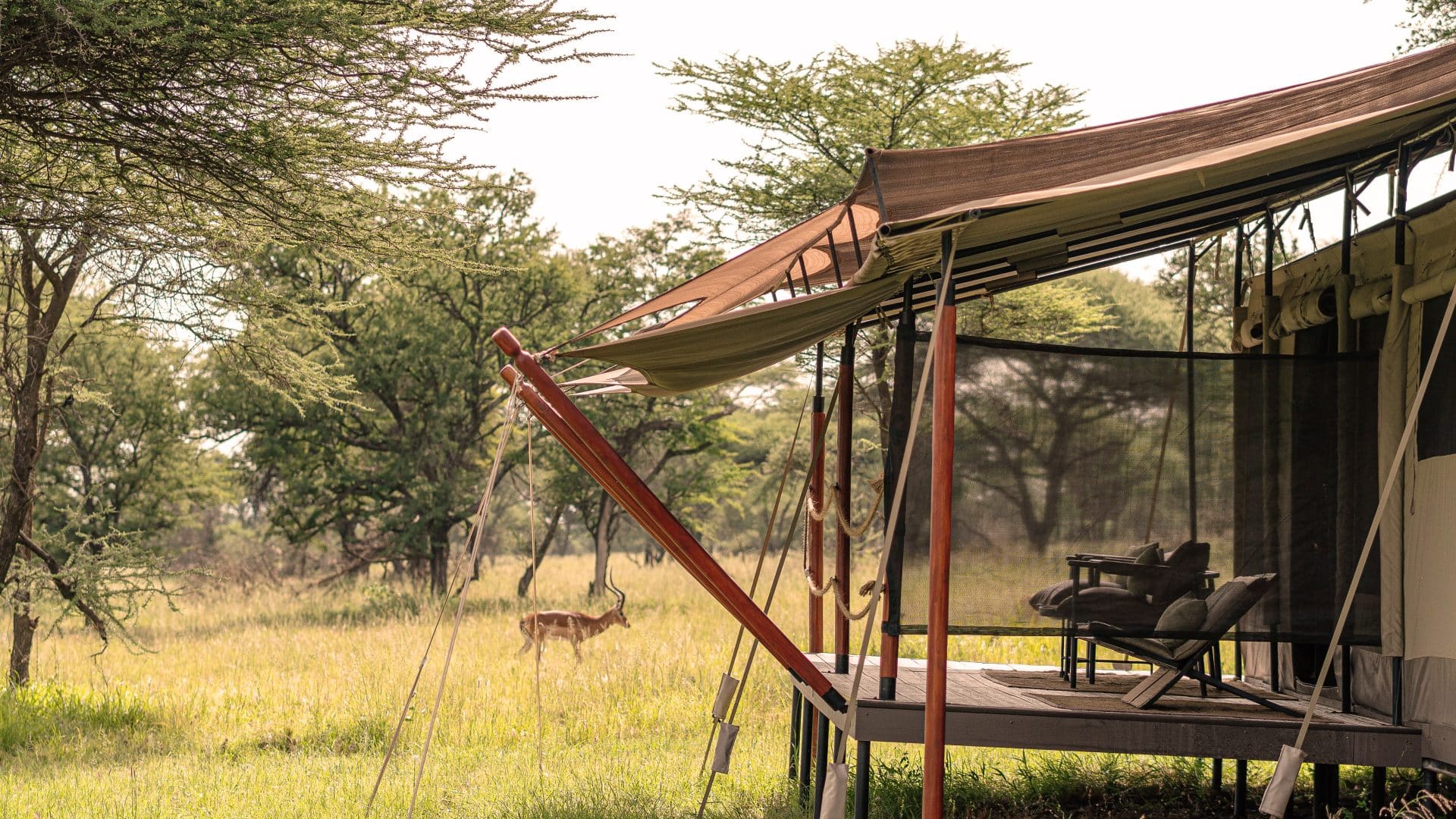
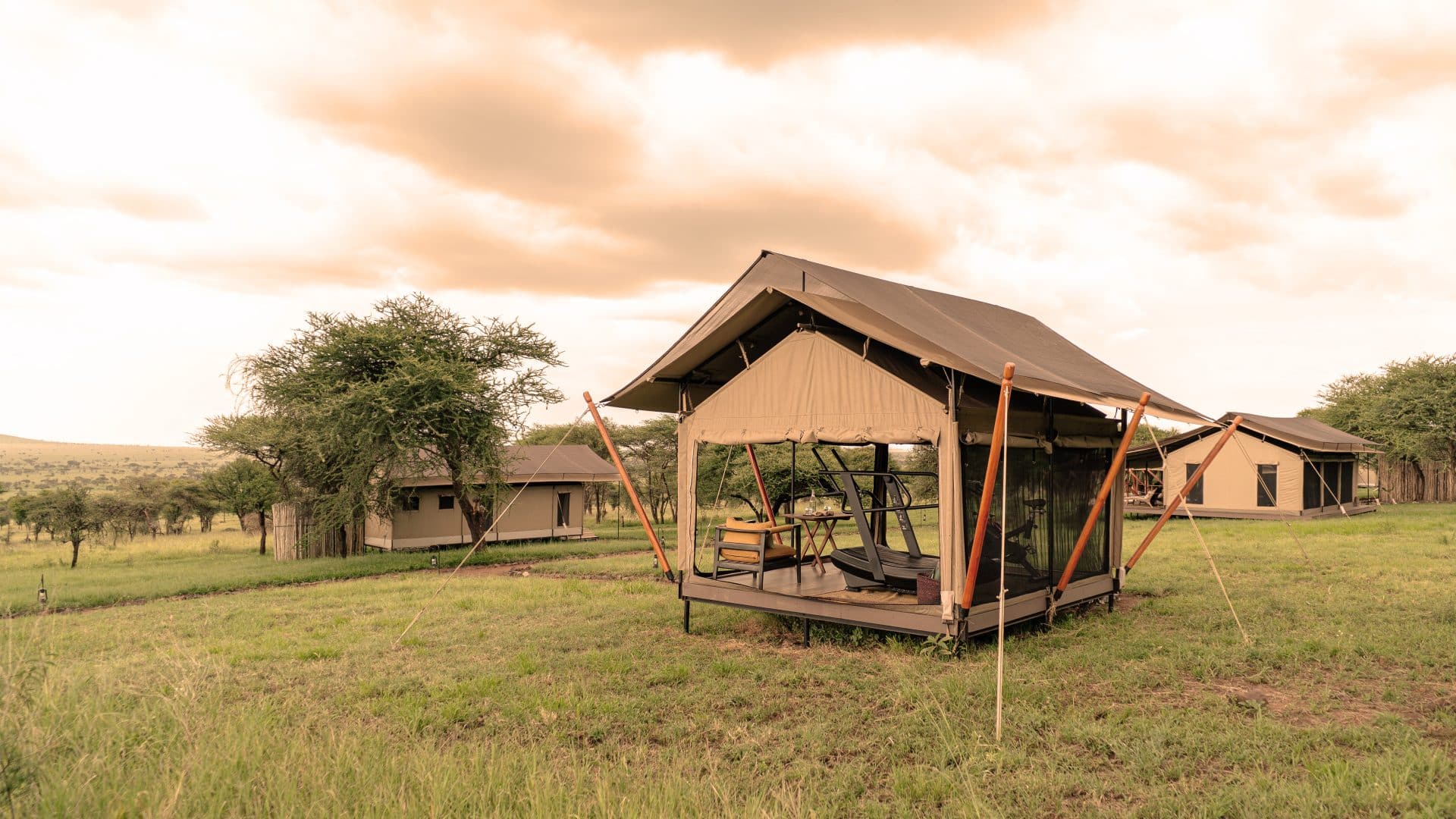
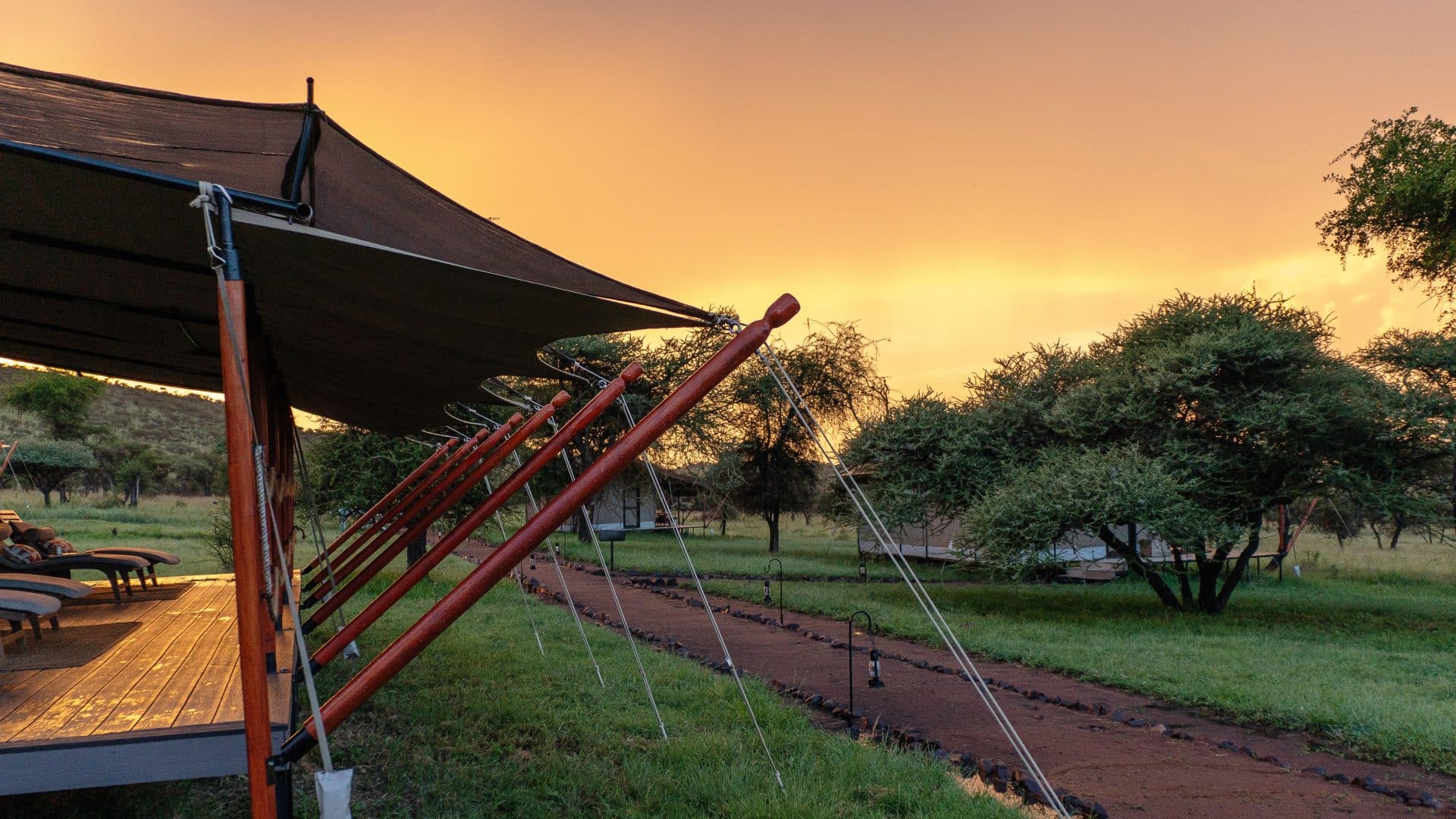
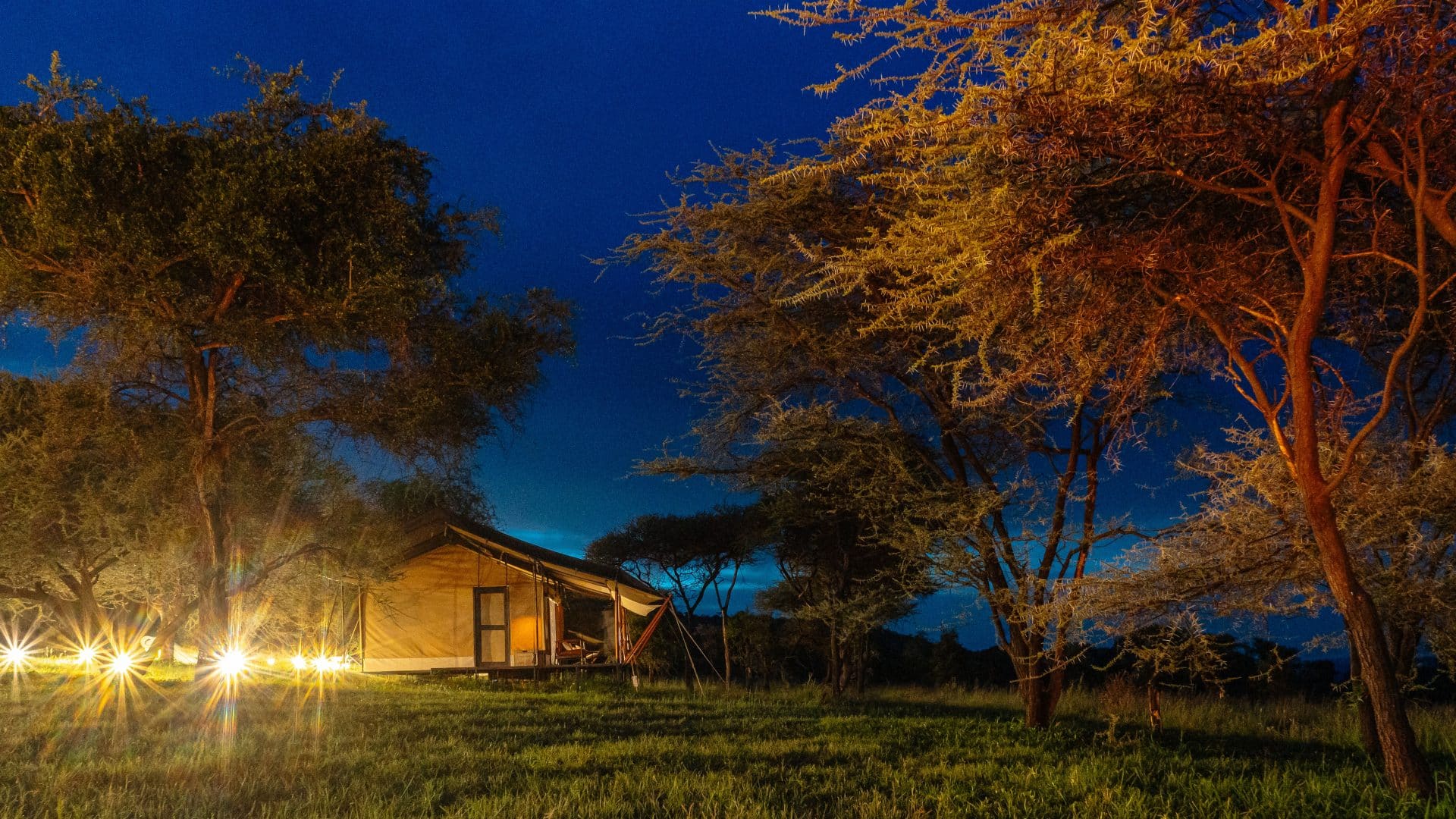
The eight luxury tents stand on raised wooden platforms with decked verandas and lounge chairs facing the plains, so you can keep watching the herds after the game drive ends. Each has a large bedroom, a full-length mirror, an in-room safe, charging points, and a bathroom with a double vanity, a flush toilet, and two showers, one inside the tent and one outside under the stars. There is 24-hour solar power and hot water, WiFi in the tents as well as the main area, tea and coffee in the tent, hand-wash laundry, and hot water bottles in the bed on cool nights. A family tent sleeps two adults and two children.
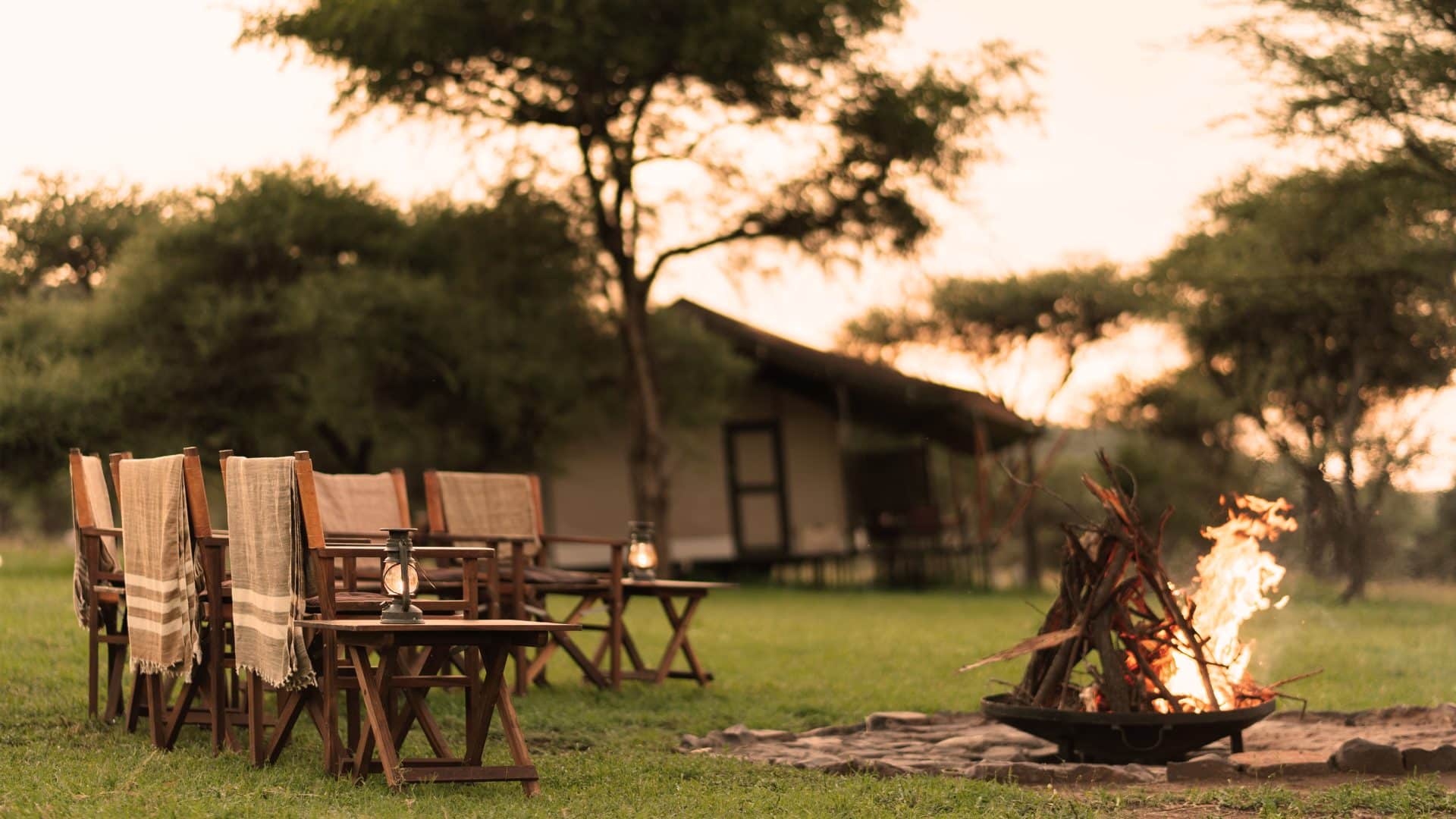
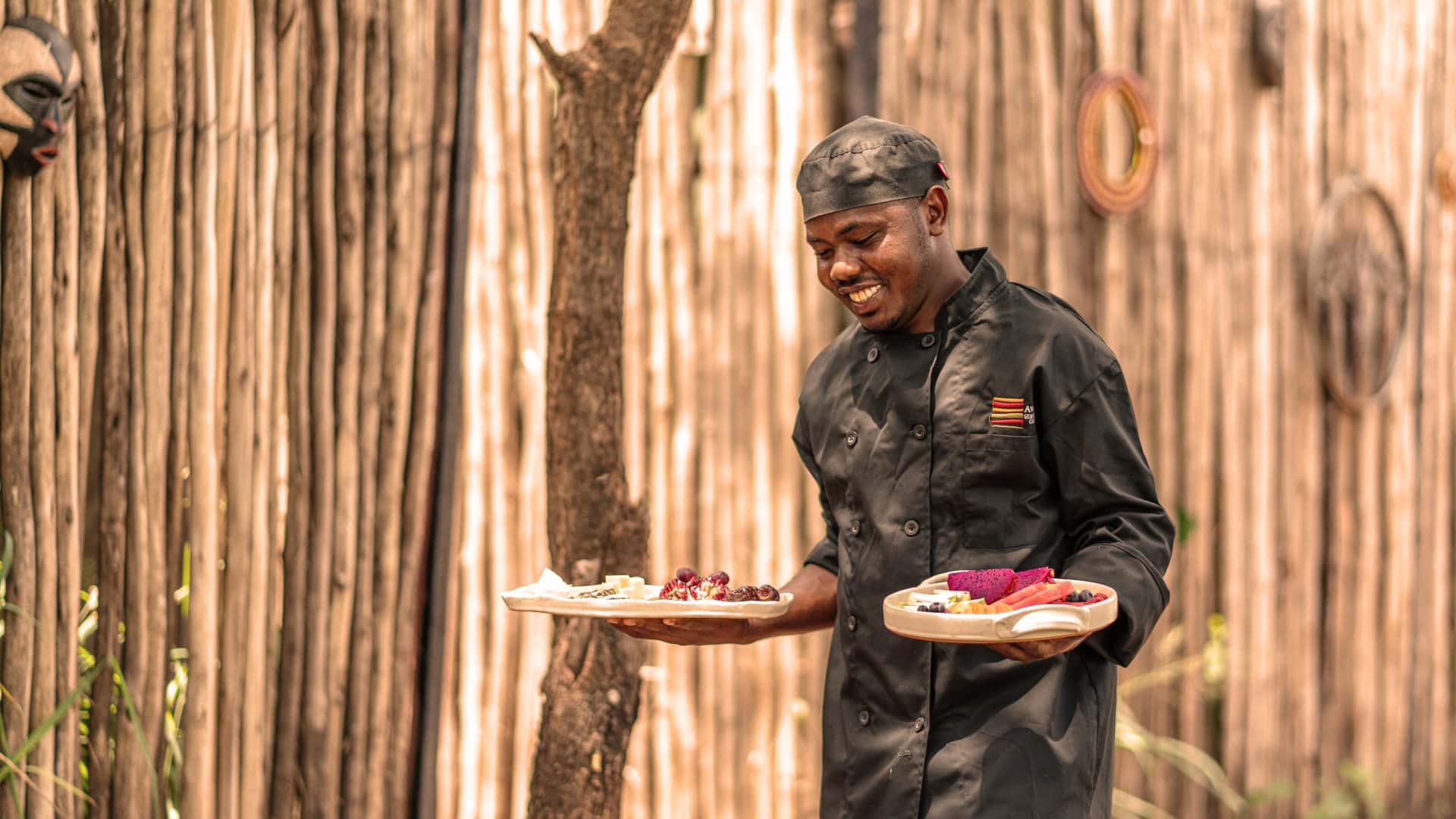
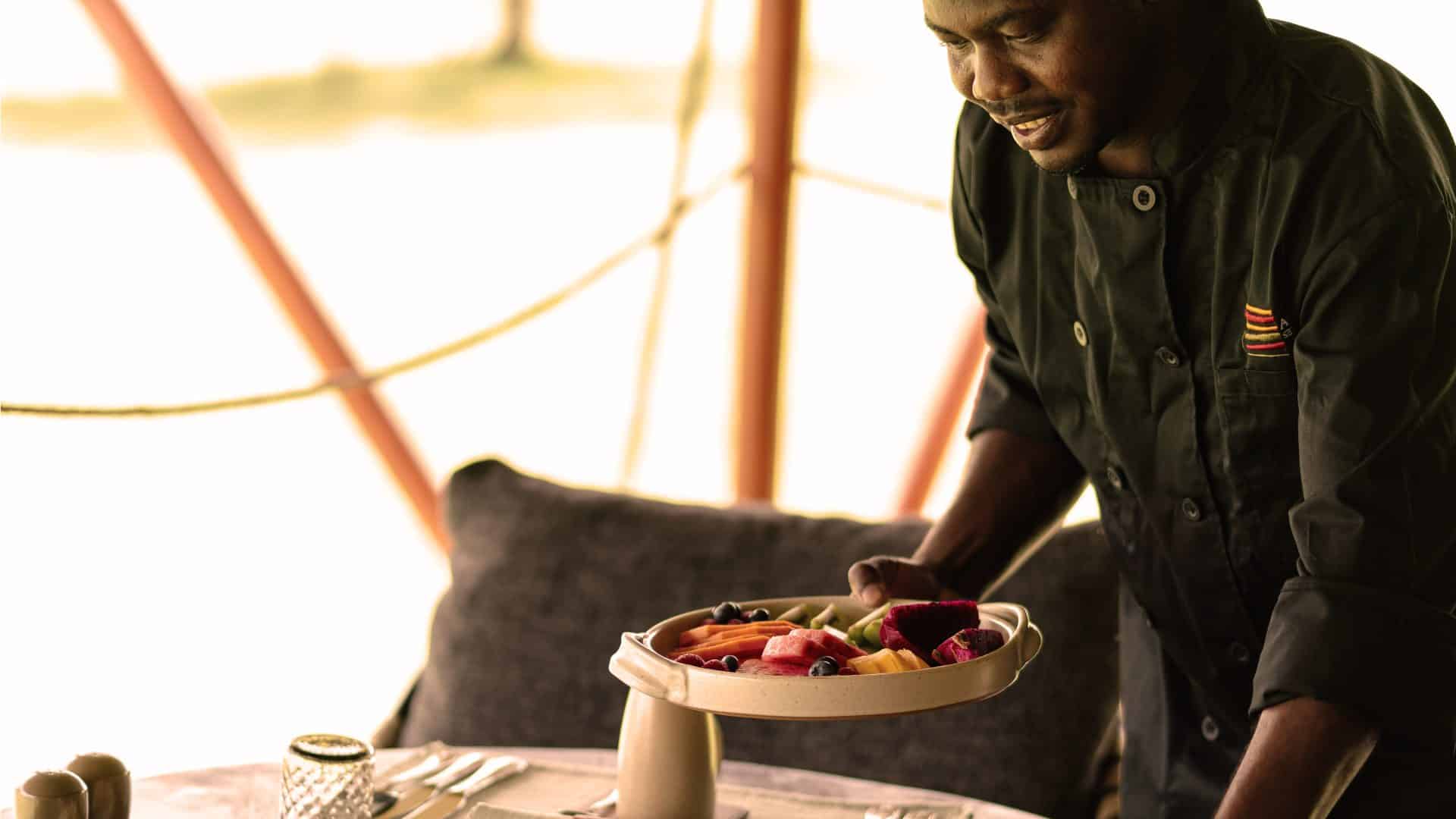
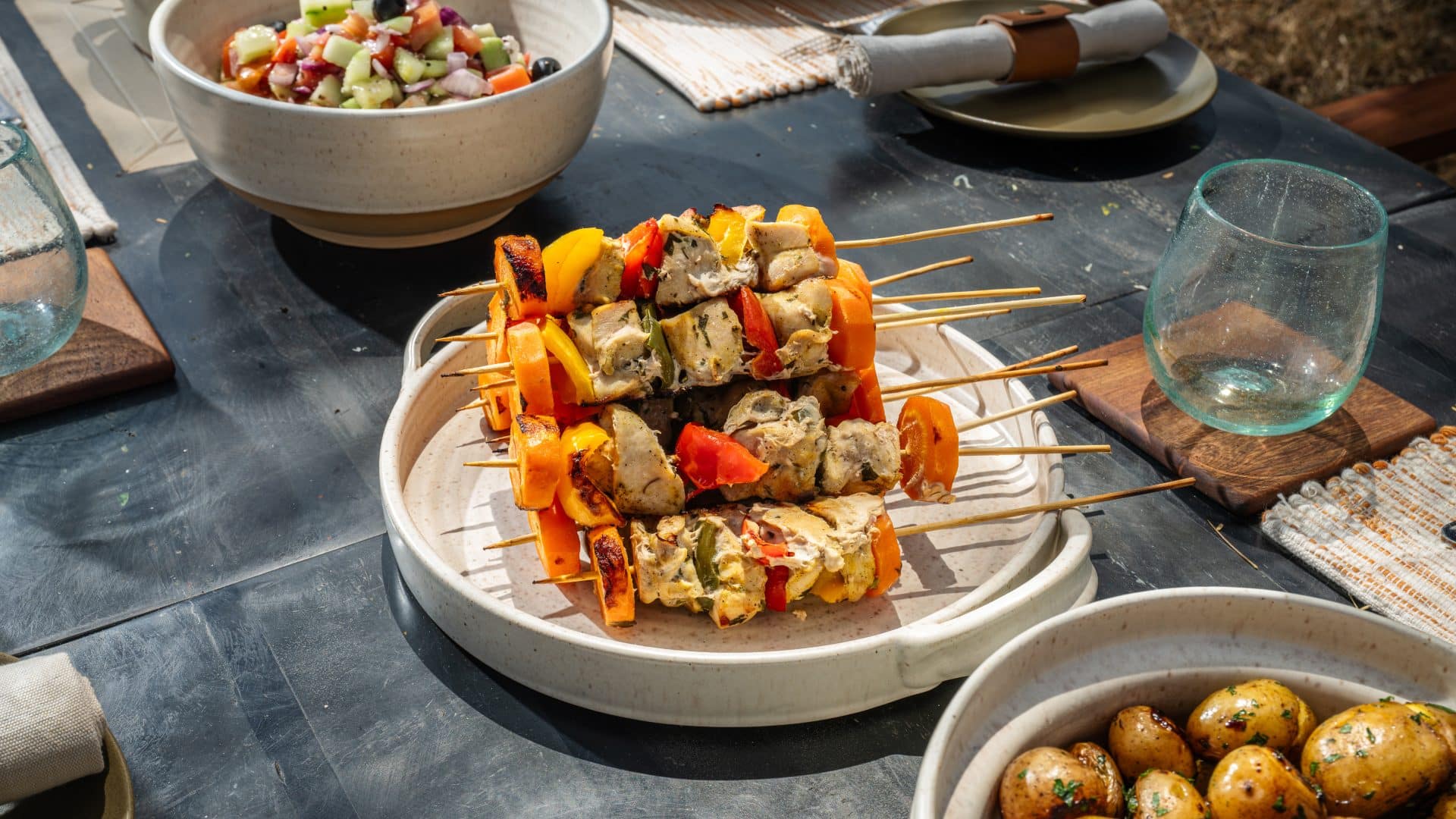
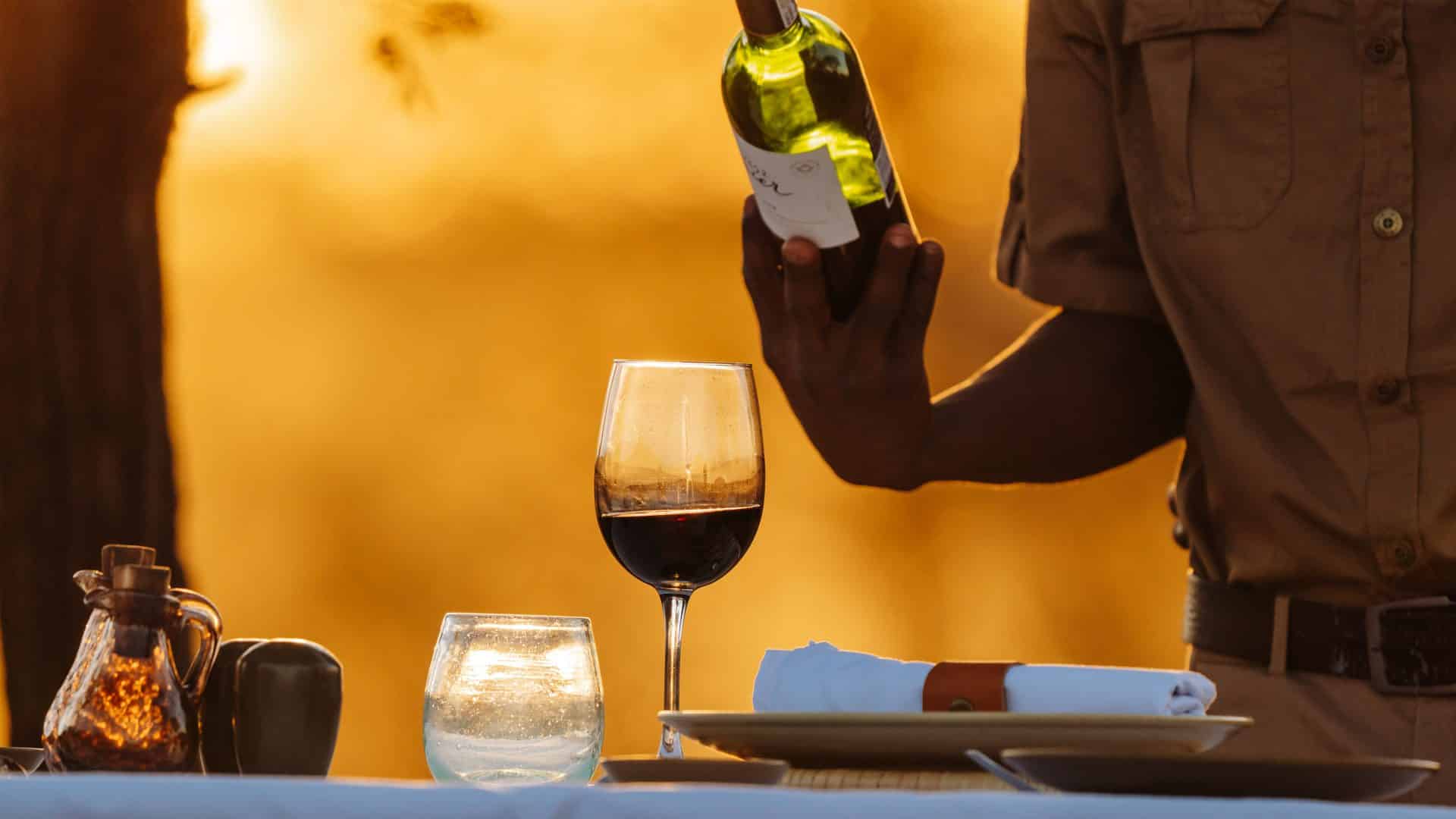
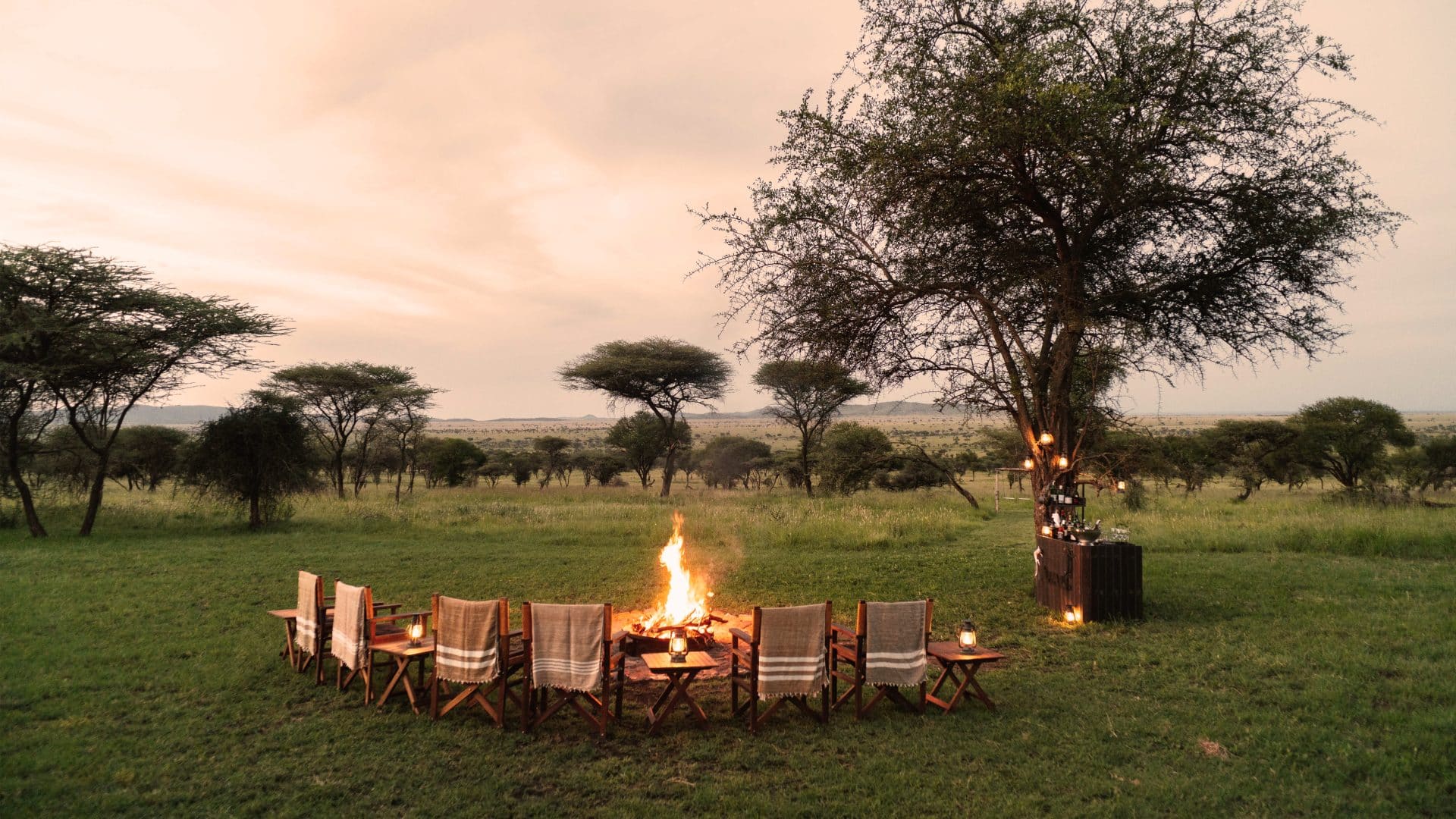
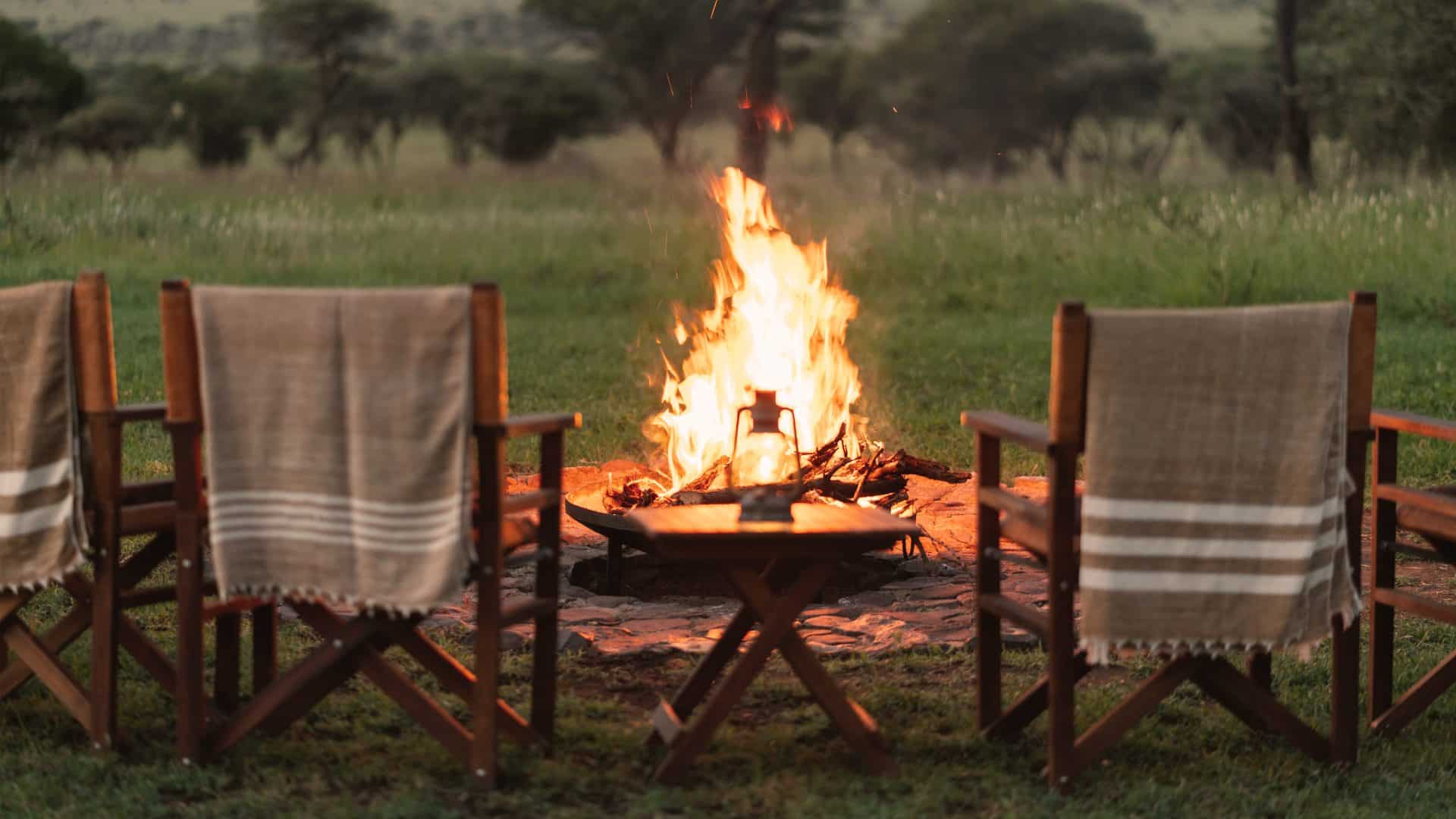
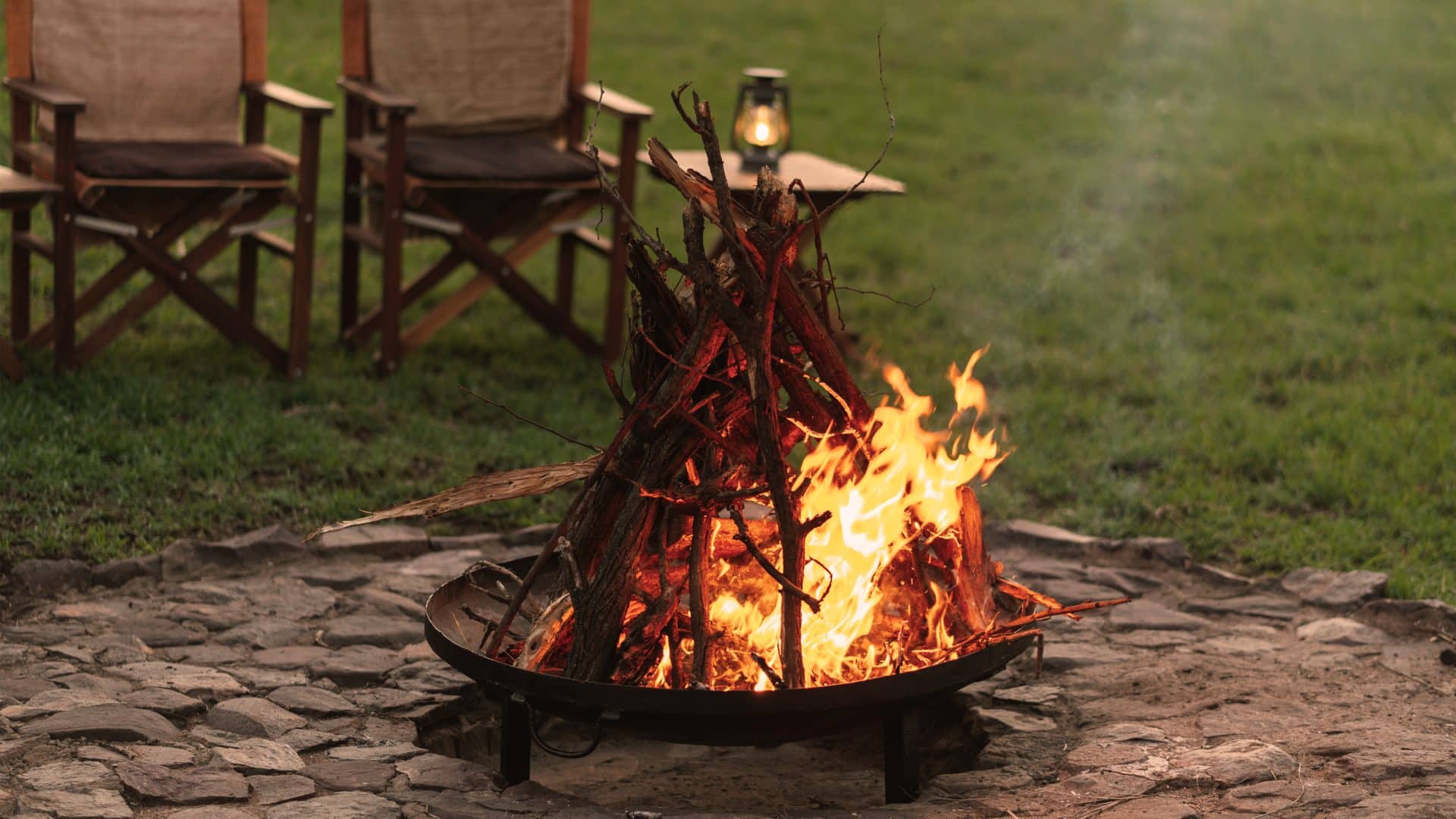
The main area is two spacious tents with open verandas, a dining tent and a lounge tent with plush seating and warm lighting, where the camp hosts the occasional movie night on a projector, and a bonfire outside for the stars. Meals are four courses at lunch and dinner, consistently singled out by guests as among the best on their safari, with fresh pancakes at breakfast a particular favorite, and there is a small bush gym tent looking out over the savanna for anyone who wants to work off the four courses. House wines, local beers, spirits, and soft drinks are included.
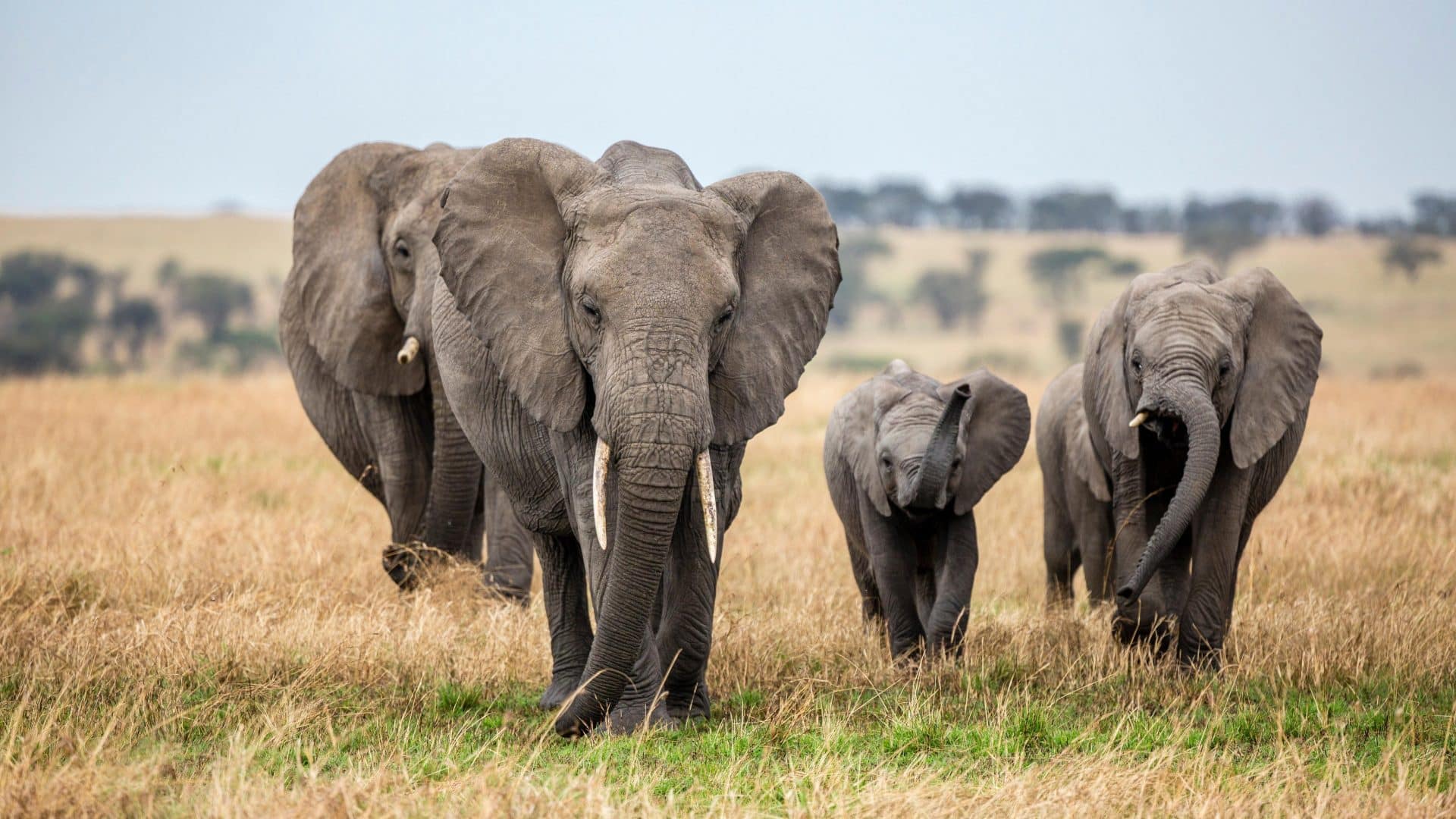
Because the camp is unfenced and in the heart of the park, wildlife wanders through: Thomson’s gazelle graze among the tents most mornings, and the larger predators pass by at night, so the camp keeps serious security and an askari walks you to your tent after dark. It is a true bush camp in the best sense, with the comforts handled quietly and the Serengeti left exactly as it is.
Between Seronera and Moru, on the Migration Route
Awali Serengeti Camp sits on the slope of Rongai Hill about 16 km (10 miles) southwest of Seronera, roughly 45 minutes from the Seronera airstrip on the road into the Moru Kopjes. Rongai Hill is the ground the main body of the migration crosses in May and June on its way north from the plains to the Mbalageti Valley, so in those months you are sleeping on the migration route rather than driving to it. This is a May and June camp on our itineraries: the herds, the rut, and the quiet weeks before the summer season begins.
-
- Moru in the Backyard: The Moru Kopjes, with their granite monuments, candelabra trees, Maasai paintings, Gong Rock, and the park’s only black rhino, are a short drive south, close enough for a morning there and lunch back at camp.
-
- Seronera Within Reach: The Seronera Valley, the Seronera River loops, Makoma Hill, and Retina Hippo Pool are all under an hour to the north, so the big cat circuit is a comfortable half day.
-
- On the Way In: Lake Magadi and the Simba Kopjes lie between the camp and Seronera, and the drive from the airstrip is a game drive in itself.
-
- The Natural Road South: From Awali the route to the Ngorongoro Crater runs south past the Simba Kopjes and across the long grass plains to Naabi Hill and Olduvai Gorge, a full-day game drive that follows the herds’ own road in the opposite direction.
-
- Getting There: On our green season itineraries guests fly into the Seronera airstrip and game drive 45 minutes to camp, usually after a stay in the Seronera Valley, then continue south to the Crater. On dry season itineraries guests arrive by road from the North Serengeti via Seronera.
The camp is unfenced. Thomson’s gazelle among the tents most mornings, hyena and lion calling at night, and in May and June the columns of wildebeest moving across the plain below the deck.
Moru, Seronera, and the Rut in May
Awali Serengeti Camp sits between the two great game areas of the central Serengeti, with Moru to the south and Seronera to the north, and the Mbalageti Valley, the main artery of the northward migration, close by. In May and June the herds are moving through all three.
-
- Moru Kopjes: The most extensive kopjes in the park rise out of golden grassland a short drive south of camp, 45 square miles of smooth granite monuments and candelabra euphorbia trees in what Kay Turner called the most beautiful scenery in the Serengeti. Moru is the park’s last stronghold of the black rhino, a population rebuilt from two surviving females after a young bull named Rajabu walked 70 miles from the Ngorongoro Crater to find them, and now numbering around 20 under round-the-clock protection from the Serengeti Rhino Project. A short walk up one of the kopjes leads to the Maasai rock paintings, shields, elephants, and people painted in white clay, black ash, and red nightshade juice, and to Gong Rock, a boulder with circular holes that rings when struck in the right place. Elephants climb the kopjes, lions use the boulders as lookouts, and in May the migration stalls here for the wildebeest rut, when half a million bulls establish territories a hundred feet across, hold them for a few hours as the columns pass, and do it again further on.
-
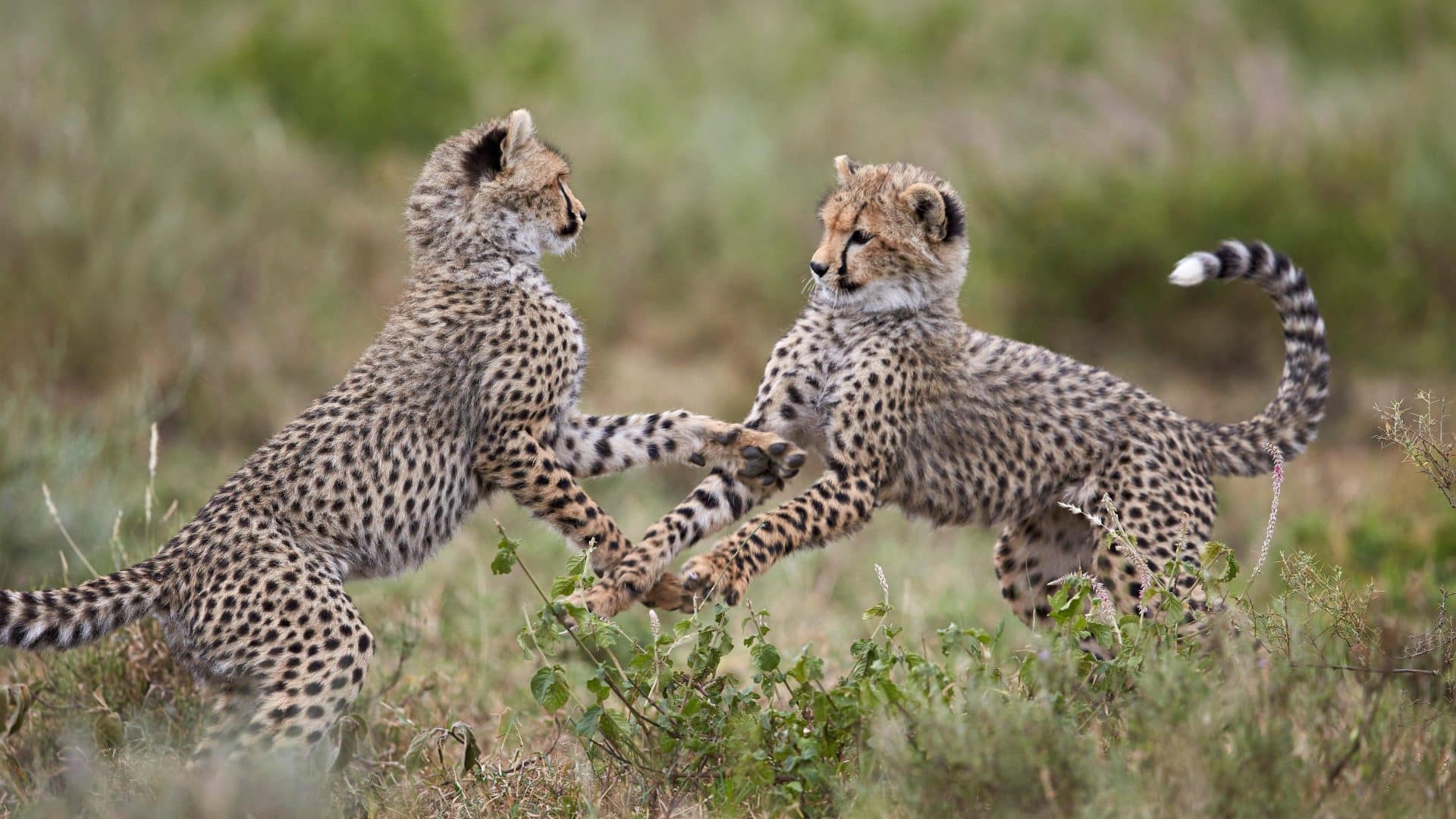
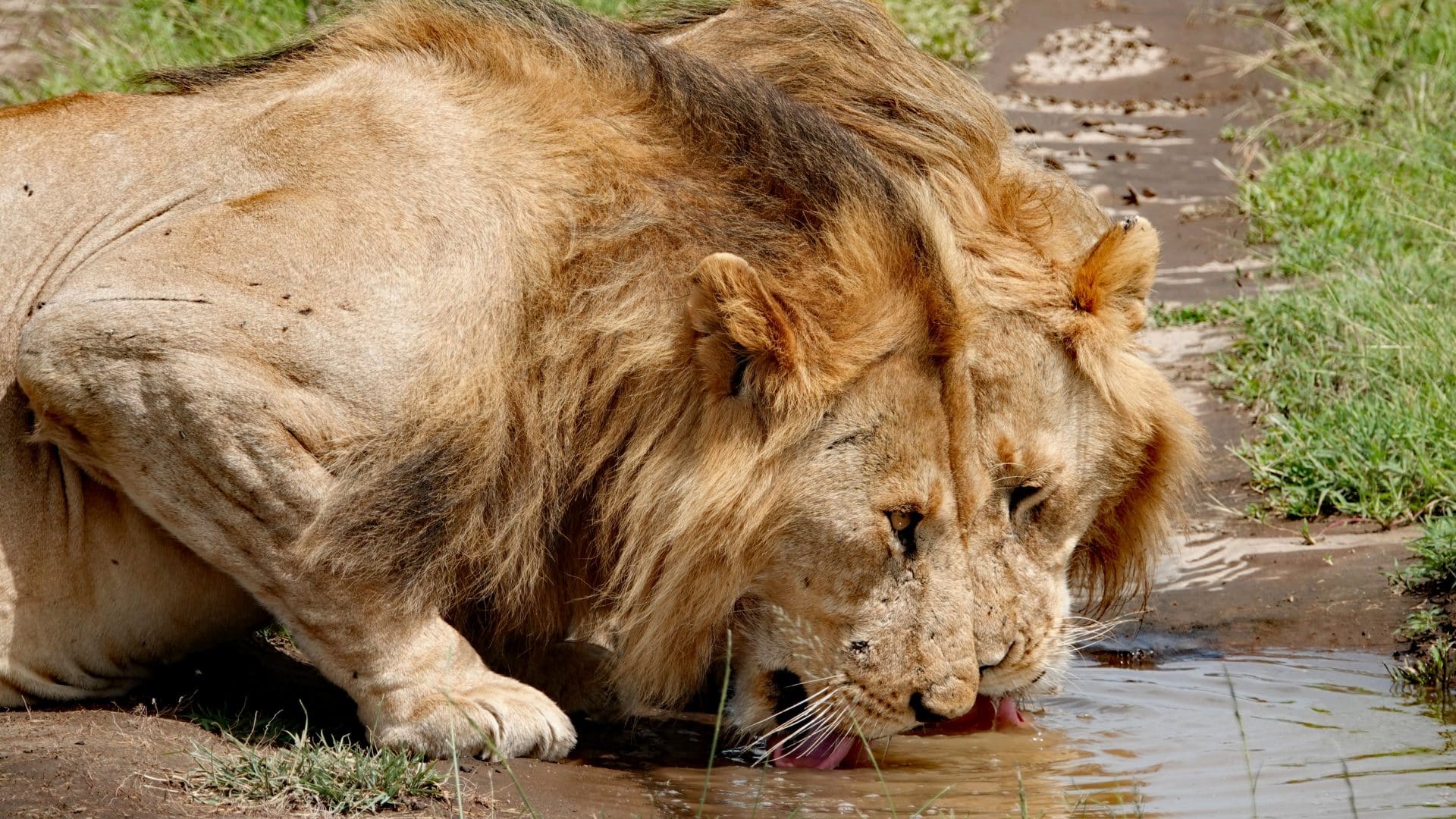
- Simba Kopjes and Lake Magadi: On the road between camp and Seronera, the Simba Kopjes are the tallest granite formations in the park, rising sharply from the open plains at the southern edge of the central Serengeti. The resident pride uses the height of the rocks to track the migration from miles away, and it is common to find several lions draped over the flat tops of the lower boulders in the morning sun; Soit Naado Murt, the Long-necked Stone, is the most recognizable silhouette in this part of the park. Directly west lies the shallow, saline Lake Magadi, a good spot for flamingos gathering in the glass-like water, with the monogamous Bohor reedbuck in the swamp along its edge and zebra, elephant, Grant’s gazelle, bat-eared fox, and nomadic cheetah on the surrounding plains.
-
- Mbalageti River Valley: West of Moru, the Mbalageti is the primary artery of the northward migration, a lush fold in the hills where the biggest group of the herds congregates and stalls in May and June before the dry season pushes it on toward the Western Corridor. The concentration of wildebeest and zebra in this narrow corridor can be immense, the resident lions and hyenas of the valley feast on it, and the tall trees along the river are prime habitat for the Martial eagle, the Serengeti’s most powerful raptor. The valley also holds some of the largest baboon troops in the park.
-
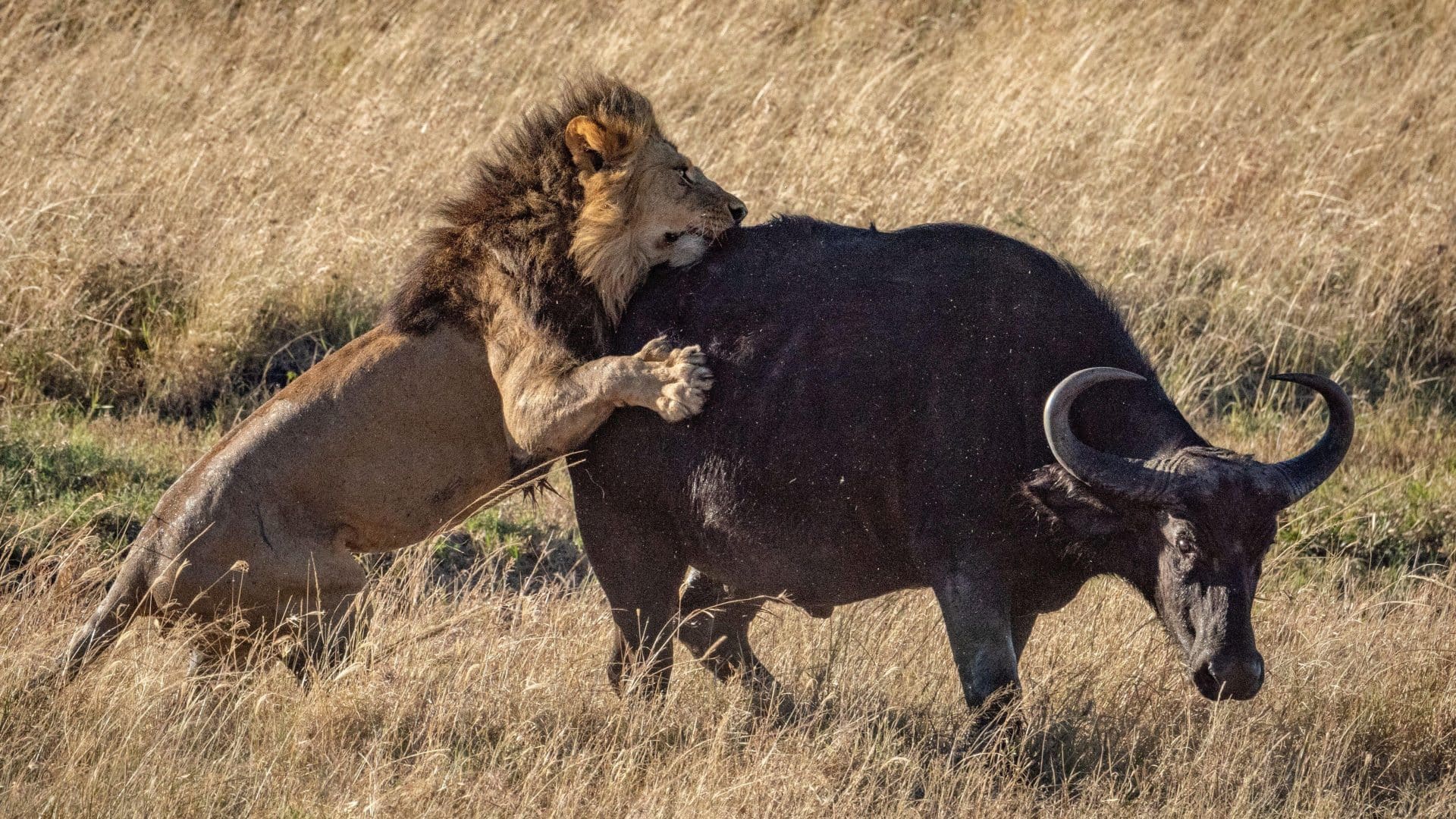
- The Seronera Valley: Under an hour to the north, the valley takes its name from the Maasai word for the bat-eared fox, but it is better known as the Big Cat Capital of Africa. Its perennial rivers keep a huge resident prey population in place through every month of the year, which in turn supports the densest and most diverse concentration of predators on the continent. A single day’s drive here can realistically produce lion, leopard, cheetah, and hyena, with serval, caracal, and jackal in the supporting cast. The migration pours through twice a year, north in May and June and south in November and December.
-
- The Seronera River: The largest of the four green fingers that wind across the valley floor, lined with yellow-barked fever trees and sausage trees, is widely considered the best place in Africa to see leopard. A long-term study recorded one leopard per ten square miles along this river, and because the trees along the banks are relatively sparse, spotting a tail twitching from a sausage tree branch is a daily event rather than a lucky one. The riverbanks also hold the largest and most stable lion prides in the park, studied continuously since 1966 by the Serengeti Lion Project.
-
- Makoma Hill: The wooded hill on the western wall of the Seronera Valley is one of the top highlights of the central circuit. The Makoma Plain between the hill and the river is a natural bottleneck for game moving between wet and dry season ranges, and the Thatch Kopjes in its center are the den site of the Makoma lion pride, famous for lounging in plain view and ambushing buffalo herds of 100 or more in the tall grass. Makoma is one of only eight places in the southern Serengeti with a resident cheetah population, and a hidden track behind the hill leads to one of the best private bush lunch viewpoints in the park.
-
- Sametu Marsh and Kopjes (Full Day): East of Seronera on the remote edge of the short-grass plains, Sametu is widely regarded as one of the top three highlights of the entire Serengeti, and few vehicles ever reach it. A cluster of granite island-kopjes rises from a flat sea of grass with a permanent spring-fed marsh at its feet, the only year-round water for miles and home to the Sametu pride, the largest lion pride in the Serengeti and the subject of Jeanette Hanby’s book Lions Share. From Awali this is a long full day with an early start, crossing the Seronera circuit on the way out and back.
In Camp
Thomson’s gazelle grazing between the tents at breakfast, hyena and lion calling after dark, and in May and June the wildebeest columns moving across the plain below the lounge deck.
Eight Tents on the Hillside
Awali Serengeti Camp has eight luxury tents on raised wooden platforms along the slope of Rongai Hill, each with a decked veranda and lounge chairs facing the plains.
-
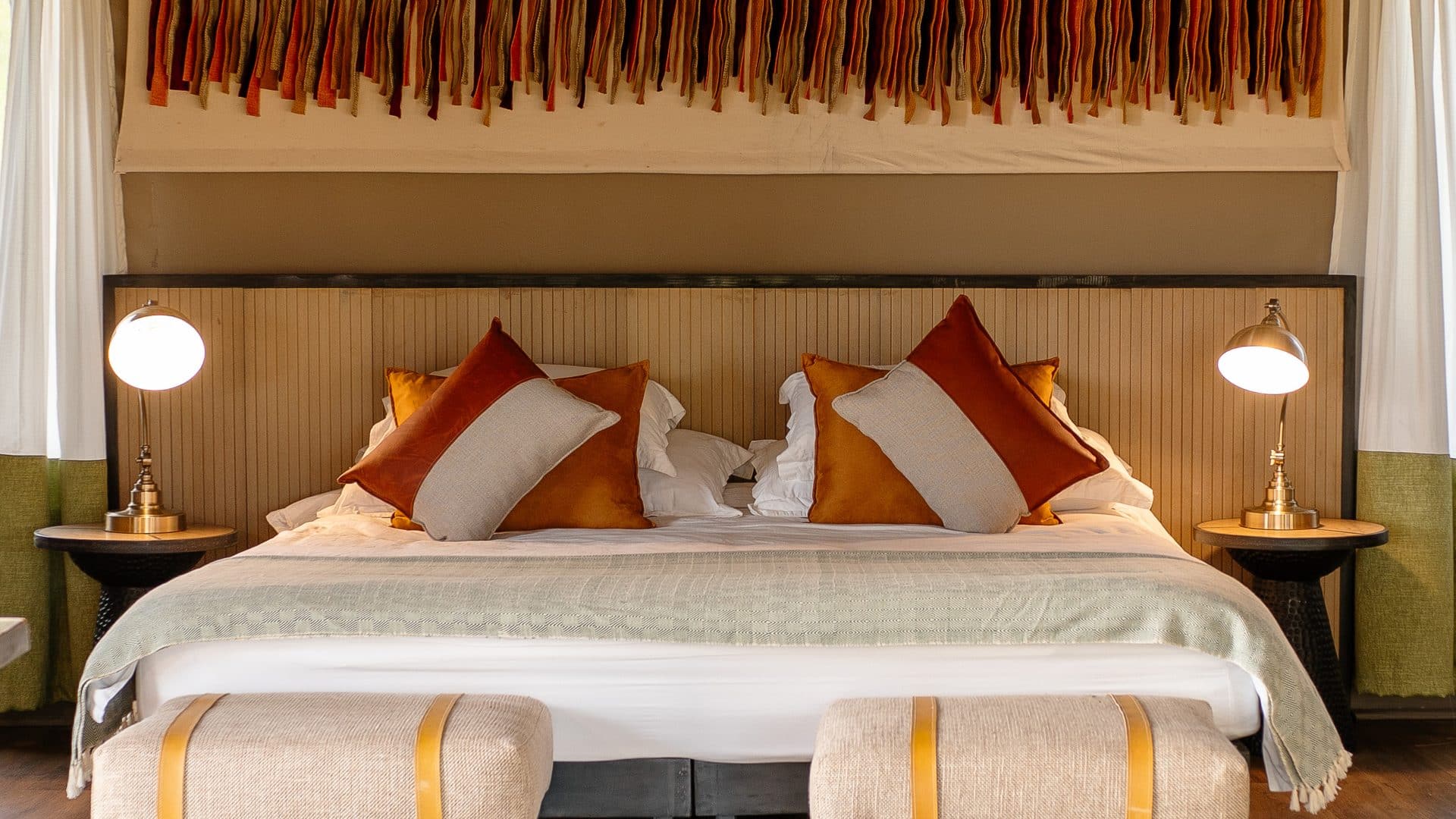
- Luxury Tents: A large bedroom with a king or twin beds, a seating area, a full-length mirror, in-room safe, and charging points, and an en-suite bathroom with a double vanity, flush toilet, and two showers, one inside the tent and one outside under the stars.
-
- Luxury Family Tent: The same layout with more space, sleeping two adults and two children.
-
- In Every Tent: 24-hour solar power and hot water, WiFi, tea and coffee tray, hot water bottles on cool nights, and hand-wash laundry service. Canvas on platforms, so expect the tents to flap a little on windy nights; that is part of the bush camp experience.
-
- Full Board with House Drinks: Four-course lunches and dinners, breakfast with fresh pancakes, and house wines, local beers, spirits, and soft drinks included.
-
- Dining and Lounge Tents: Two spacious tents with open verandas over the savanna, plush seating, and warm lighting, with the occasional movie night on a projector.
-
- Bonfire: Evenings around the fire under the stars, with sundowners on the lounge deck as the light goes.
-
- Bush Gym: A small open-sided gym tent with essential equipment and a view over the plains.
-
- Bush Breakfasts and Picnic Lunches: Full days in Moru and Seronera with picnic lunches at Gong Rock or Lake Magadi.
-
- Balloon Safaris: Sunrise balloon flights over the Seronera Valley from the nearby launch site, arranged with us in advance.
-
- Walking Safaris: Short guided walks around camp can be arranged through the camp.
-
- Practical Comforts: WiFi throughout, charging points, hand-wash laundry, 24-hour security, and an askari escort to your tent after dark.
-
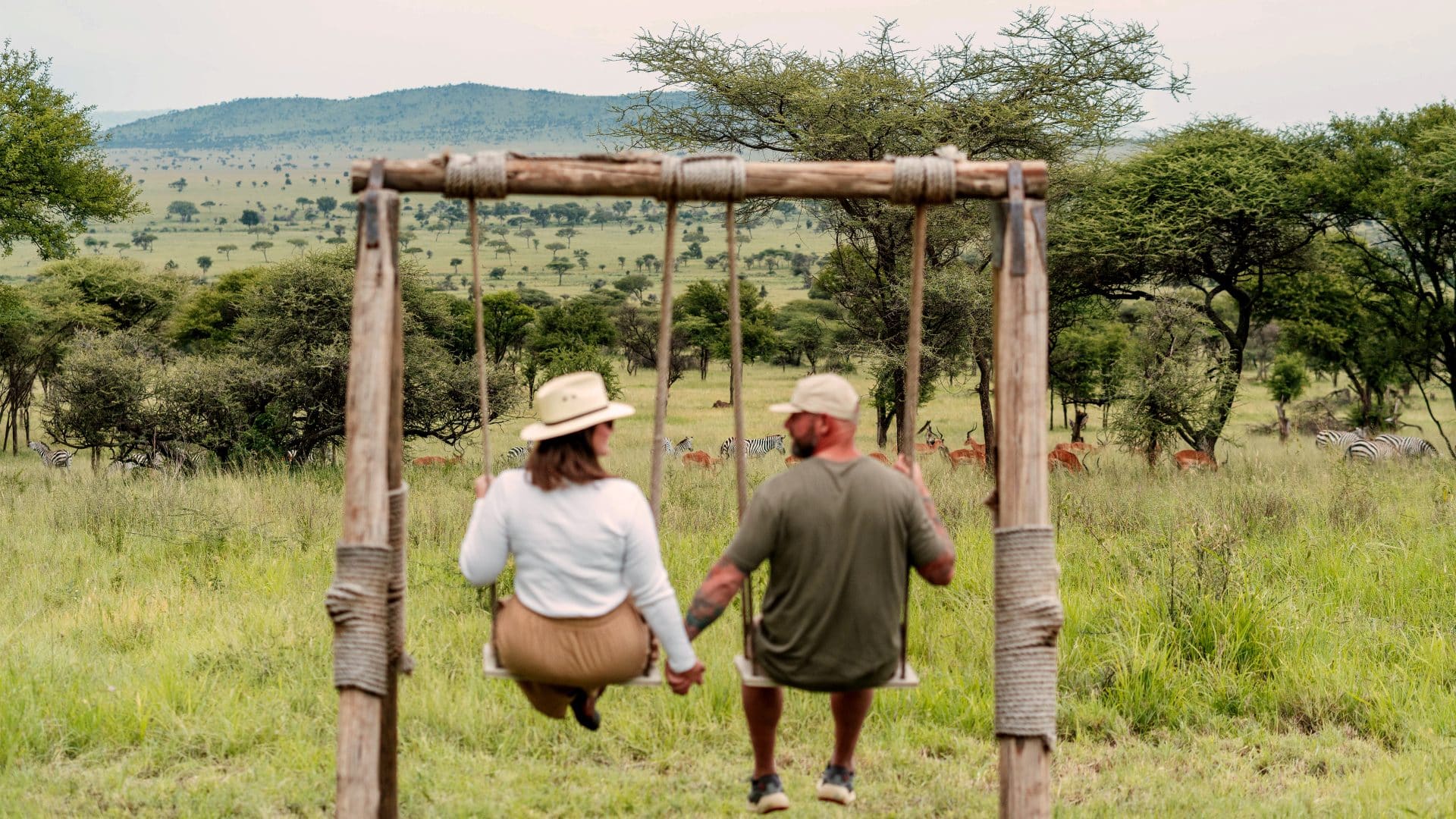
- Swing With a View: A swing set against the Serengeti plains, which the camp calls its unique add-on.
- Open All Year.
Nearby Attractions


Seasonal Highlights
| Month | Season | Weather | Wildlife Sightings | Rec. |
|---|---|---|---|---|
| Jan | Green Season | 60 - 85 F Mostly sunny with few showers |
Leopard, Lion, Giraffe, Impala, Buffalo, Hippo | Yes |
| Feb | Green Season | 60 - 85 F Mostly sunny with few showers |
Leopard, Lion, Giraffe, Impala, Buffalo, Hippo | Yes |
| Mar | Green Season | 60 - 83 F Mostly sunny with few showers |
Leopard, Lion, Giraffe, Impala, Buffalo, Hippo | Yes |
| Apr | Green Season | 60 - 83 F Mostly sunny with few showers |
Leopard, Lion, Giraffe, Impala, Buffalo, Hippo | Yes |
| May | Northward Migration | 56 - 81 F Mostly sunny |
Leopard, Lion, Giraffe, Impala, Buffalo, Hippo, Possibility of the Wildebeest Migration in mid to late May | Yes |
| Jun | Beginning of Dry Season | 56 - 81 F Mostly sunny |
Wildebeest Migration, Zebra Migration, Thomson's Gazelle Migration, Cheetah, Leopard, Lion, Giraffe, Buffalo, Hippo | Yes |
| Jul | Dry Season | 60 - 83 F Mostly sunny |
Thomson's Gazelle Migration, Cheetah, Leopard, Lion, Giraffe, Impala, Buffalo, Hippo | No |
| Aug | Dry Season | 55 - 81 F Mostly sunny |
Thomson's Gazelle Migration, Cheetah, Leopard, Lion, Giraffe, Impala, Buffalo, Hippo | No |
| Sep | Dry Season | 55 - 81 F Mostly sunny |
Thomson's Gazelle Migration, Cheetah, Leopard, Lion, Giraffe, Impala, Buffalo, Hippo | No |
| Oct | Dry Season | 60 - 83 F Mostly sunny |
Thomson's Gazelle Migration, Cheetah, Leopard, Lion, Giraffe, Impala, Buffalo, Hippo | No |
| Nov | Southward Migration | 60 - 83 F Mostly sunny with few showers |
Leopard, Lion, Giraffe, Impala, Buffalo, Hippo, Wildebeest Migration, Zebra Migration | Yes |
| Dec | Beginning of Green Season | 60 - 83 F Mostly sunny with few showers |
Leopard, Lion, Giraffe, Impala, Buffalo, Hippo | Yes |
Nearby Lodges


What are you waiting for?
Create Your Own Itinerary
Receive instant day-by-day trip details designed just for you including rates, seasonal highlights, guest testimonials, photos & more!
Get In Touch
Our Safari Specialists Are Ready to Help Kickstart Your Adventure
Toll-Free
US Office
609 Deep Valley Drive, Suite 200, Rolling Hills Estates, CA 90274
Hours: Daily 8AM - 8PM PST
Drop Us A Line
Leave your contact info below