

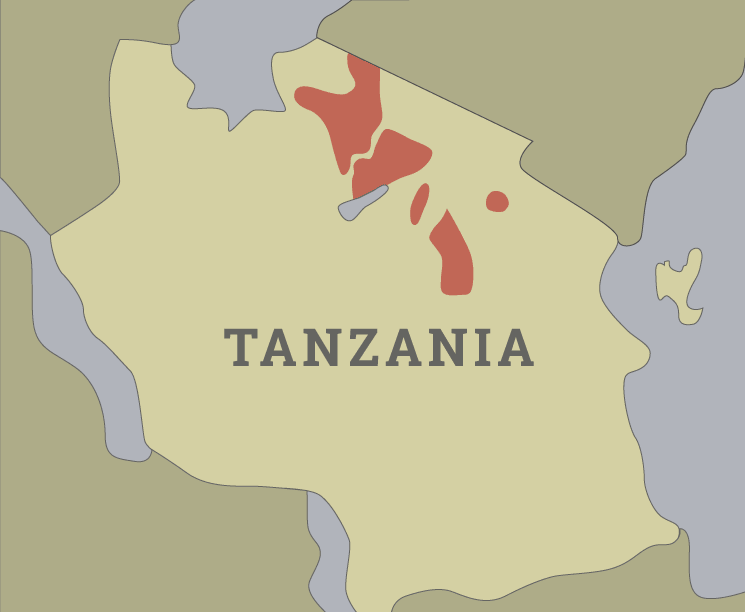
Weather
The rains from early November to late March are usually sporadic and
typically do not last for more then a few hours. These expected sporadic
showers do not usually pose much of an inconvenience while game driving.
There is a chance of heavier rain during this period but during most
years the heavier rain falls in late March and April. If it does rain,
it will usually clear in 1-2 hours and more then likely the rain will
be localized. It is rare that rain clouds will settle over a large area
for an extended period of time. Late March usually heralds the beginning
of the so called ‘long rains’ which simply does not mean
much of anything in the Serengeti and is more applicable to other areas
in East Area. However, there is risk of heavier rain in late March,
which may pose an inconvenience while game driving. This risk is mitigated
by the fact that it tends to rain less on the Serengeti plains where
the best wildlife viewing is located during March. We strongly recommend
longer duration safaris during late March, April and early May. We view
the extra night or two as insurance against the potential of sour weather
having a negative impact on any one day.
Rain falls in different amounts over various locations throughout Northern
Tanzania. The Ngorongoro Crater, Tarangire and Lake Manyara receive
higher rainfall then many parts of the Serengeti. There is a steep rainfall
gradient in the Serengeti from the dry southeast to the wet northwest.
The winds that bring rain blow from the east. The Ngorongoro Highlands
block much of the rain from reaching the eastern and southern plains
of the Serengeti. However, the western and northern parts of the Serengeti
receive a much greater amount (2-3 times more) of participation as compared
to the southern and eastern Serengeti. The wetter western and northern
Serengeti areas are affected by Lake Victoria. This means that in the
southern Serengeti where you should ideally focus your March safari,
the rains should not be an issue and it will rain substantially less
then the other areas of the Serengeti and Tanzania.
Temperatures are pleasant with an average high of 83 degrees and an
average low of 60 degrees. However, the rim of the Ngorongoro Crater
can get quite cold at night and in the early morning. Visitor numbers
drop off dramatically in the beginning of March and by late March the
parks are relatively empty of tourists. March is certainly an excellent
time to visit with few tourists around, green landscapes and superb
wildlife viewing opportunities.
Seasonal Wildlife Highlights
Serengeti National Park
Northern Serengeti (Woodlands)
Not recommended during March.
Western Serengeti (Woodlands)
Not recommended during March.
Central Serengeti (Plains/Woodlands Border)
March Recommended Duration of Game Drives: 1 - 2 Days
March Wildlife Highlights: Leopard, Lion, Giraffe, Impala, Buffalo,
Hippo
The Central Serengeti offers superb game viewing year round due to the
abundance of resident animals. Specifically, the Seronera River Valley
in the Central Serengeti is a ‘must see’ on every safari
regardless of the specific month of travel. Game viewing is better during
the dry season (June - October) but during the wet season and including
March there is still plenty of resident animal action. Resident herbivores
include impala, buffalo, hippo, warthog, topi, hartebeest and giraffe.
Resident carnivores include lion and leopard.
There are 12 documented resident lion prides just within a one-hour
game drive radius from Seronera. All these prides do shift east and
south in their territories during the wet season but they are still
reachable though not in the same numbers found during the dry season.
The Seronera Valley in the Central Serengeti is also one of the best
areas in Africa to spot the elusive leopard. You will likely encounter
this majestic cat in the branches of the sausage trees that dot the
banks of the Seronera River.
Eastern Serengeti (Plains)
March Recommended Duration of Game Drives: 1 - 2 Days
March Wildlife Highlights: Cheetah, Hyena, Eland Migration, Thomson’s
Gazelle Migration
The Eastern Plains of the Serengeti are extremely seasonal. During the
dry season, you will likely encounter only a few hearty Grant’s
gazelle. However, the eastern plains come to life in the wet season
including March and offer incredible game viewing for certain species
of animals. A day trip at the minimum should be included in every green
season itinerary.
The GOL Kopjes, located on the Eastern Plains, boasts the highest concentrations
of cheetahs in Africa during the wet season. The majority of the cheetahs
in the Serengeti are migratory in that many of them follow the Thomson’s
Gazelle migration to the eastern short grass plains during the wet season
and then back to the Central Serengeti (plains/woodland border) during
the dry season.
The Eastern Plains are also the main wet season range of the giant eland
migration. Additionally, you will likely find large clans of hyenas
numbering up to 30 individuals in a single group. Hyenas are semi-nomadic
and ‘commute’ to the Eastern Plains during the wet season
from their den sites located in the Central Serengeti.
East of the Serengeti way out beyond the GOL Kopjes are the Eastern
Plains of the Ngorongoro Conservation Area. Hundreds of thousands of
migratory wildebeest range both the southern and eastern plains. You
will likely encounter thousands of wildebeest from the GOL Kopjes, east
through Angata Kiti and into the Salei Plains by the active volcano
Mount Lengai. This is an extremely beautiful and remote area of the
Eastern Plains and if you are adventurous enough to visit you will be
rewarded with superb off the beaten track game viewing.
Southern Serengeti (Plains)
March Recommended Duration of Game Drives: 2 - 4 Days
March Wildlife Highlights: Wildebeest Migration and Zebra Migration,
Lion, Cheetah, Elephant
The southern Serengeti steals the show in the wet season including March.
The life giving rains that generally begin in mid November and last
through early May trigger the great wildebeest migration into the plains
of the South Serengeti and the northern Ngorongoro Conservation Area.
March is one of the best months for game viewing.
The green season is a wonderful time to be on safari in the southern
Serengeti and the northern Ngorongoro Conservation Area. Rain means
game in the Serengeti and wildlife should be prolific on the Southern
Serengeti Plains. The southern plains encompass a massive area so it’s
best to locate yourself in more then one area if time allows. The wildebeest
migration will most likely be spread across the now green plains of
the northern NCA and the southern Serengeti. There should be thousands
of young wildebeest calves on the green plains ranging from 1 - 2 months
old. Along with the migration, predators should be abundant. There should
be good cheetah sightings though not to the extent seen on the Eastern
Plains. Lions should be easily visible, both resident prides and the
nomads which have followed the migration from the woodlands. Elephants
can also be found in the Southern Serengeti in the patches of woodland
that dot the plains including the woodlands around Lake Ndutu and Kusini.
The massive wildebeest herds are usually located just south of the Serengeti
border in the Ngorongoro Conservation Area. There will undoubtedly be
smaller herds actually within the Serengeti proper but the main herds
should be located in the extreme south. This makes Olduvai Camp and
Ndutu Lodge in a prime position to catch the herds. Kusini Camp is also
an excellent choice. More Serengeti
National Park Information.
Ngorongoro Crater
March Recommended Duration of Game Drives: 1 - 2 Days
March Wildlife Highlights: Black Rhino, Elephant, Buffalo, Lion, Cheetah
The Ngorongoro Crater, described as one of the wonders of the world,
is an amazing natural sanctuary not to be missed. Game viewing here
is among the very best Africa has to offer and is excellent at any time
of year. The crater is very small at only about 10 miles across. With
just one game drive in the Crater, it is possible to circumnavigate
the crater several times and see all the main highlights. However, every
safari we offer includes two separate game drives in the Crater over
a course of two days including one early morning 6AM drive. The goal
on the early morning game drive is to be the first person in the Crater
that day. Animals are generally more active in the morning, which makes
the early morning game drive option an excellent choice.
The crater is not a self-contained ecosystem and some animals do migrate
in and out of the surrounding NCA but not in any significant numbers
to warrant tailoring your itinerary. The main factors for planning are
weather and visitor numbers. In March, the crater should be beginning
to turn green which makes it a bit more dramatic but visitor numbers
will be relatively high. More Ngorongoro
Crater Information.
Tarangire National Park
Not recommended during March. More Tarangire
Information.
Lake Manyara National Park
March Recommended Duration of Game Drives: 0 - 1 Day
March Wildlife Highlights: Elephant, Baboons, Giraffe, Impala, Birding
Game viewing is generally fair to good in Lake Manyara at any time of
year. However, Lake Manyara does not offer the abundance of wildlife
nor quality of wildlife viewing experiences found in the other parks
of Northern Tanzania. Similar to Ngorongoro Crater, seasonal wildlife
patterns are not significant enough to warrant tailoring your itinerary.
Lake Manyara is a beautiful little park and is famous for its tree-climbing
lions, elephants and large troops of baboons. The park is home to an
amazing variety of birds and animals considering its small size. A short
visit to this serene park will greatly diversify your safari experience
as the lush green jungle habitat is of stark contrast to the other parks
you will visit during your safari.
We find that a quick day visit to Lake Manyara before either heading
back towards Kilimanjaro or on the way from the Crater to Tarangire
is sufficient and ideal for most travelers. The park gate is just a
few feet from the main road and this combined with the fact that the
park is small allows for quick and rewarding forays into the park. A
one to four hour visit to Lake Manyara makes a superb addition to any
safari itinerary. More Lake
Manyara Information.
Select another month:
JANUARY |
MAY |
SEPTEMBER |
FEBRUARY |
JUNE |
OCTOBER |
MARCH |
JULY |
NOVEMBER |
APRIL |
AUGUST |
DECEMBER |